
 한국어
 English
 繁體中文
 Монгол хэл
Korea EVO ICL Candidate List: Do You Qualify on a Short Break? Risks, Limits and Exam Days
An ICL candidate is usually an adult with a prescription stable for about a year, enough front-chamber depth, healthy corneal lining cells and no active eye disease. .
Your prescription is around minus 9, laser has already been ruled out, and you have one week off. Does that put you on the “Korea evo icl candidate list”, or would the trip to Seoul be wasted?
If your flights aren't booked yet, check the section on chamber depth before anything else.
Four things decide whether this trip makes sense: which items on the list are firm limits, which risk each item guards against, who should wait a year, and how the exam fits into a short break.
Hello, I'm Dr. Lee Ki-il, Medical Director and ophthalmologist at OLIM Eye Clinic in Gangnam.
Our comprehensive eye exam runs about 60 tests. I go through the results with you and explain them myself, and I recommend only the surgery your eyes actually need. Foreign patients get a medical interpreter for their language at no extra charge.
Most people check their prescription number first. The measurements that rule people out are usually inside the eye: the space in front of the natural lens, and the layer of cells lining the back of the cornea.
In general, an ICL candidate is an adult whose prescription has held steady for about a year, with enough depth in the front chamber of the eye, a healthy corneal lining and no active eye disease.
If you have a recent glasses or contact lens prescription, send a photo of it on WhatsApp with your break dates, and ask which items on the list your current records can't answer yet.
Your numbers decide itSend a photo of your prescription or eye exam report. The doctor reviews it.
What is on a Korea EVO ICL candidate list?
Korea doesn't publish one official list. The closest thing in print is the 2022 US FDA approval for the EVO lens, as reported by Optometry Times: ages 21 to 45, myopia from minus 3 to minus 20, astigmatism of 1 to 4 diopters for the toric version, an anterior chamber depth of 3.00 mm or more, and a prescription that changed by no more than 0.5 D in the year before surgery.
Surgeons then add items from their own exam. Each one is there because it prevents a specific problem:
| Item | What's checked | Why it's on the list |
|---|---|---|
| Age | Adult, usually under the mid-40s | Before 21 the prescription often still moves; after the mid-40s the natural lens starts to age |
| Stability | Little change over a year | A lens sized for a moving prescription leaves you under-corrected |
| Chamber depth | Space between cornea and natural lens | Too little room raises the risk of pressure rise, cataract and corneal cell loss |
| Corneal lining cells | Endothelial cell count | These cells keep the cornea clear and don't grow back |
| Pupil in dim light | Pupil size | Large pupils make night glare and halos more likely |
| Pressure and retina | Eye pressure, retinal scan | Glaucoma or weak spots in the retina need attention first |
Pregnancy, uncontrolled diabetes and active inflammation inside the eye usually mean you postpone surgery. They don't necessarily mean you can never have it.
Why chamber depth rules out more people than the prescription
An ICL sits behind the iris, just in front of your own lens. It needs a small, steady gap between the two. When the front chamber is shallow, there's nowhere safe for that gap. The implant can crowd the natural lens, which raises the chance of a cataract. It can also push the iris forward and slow the fluid that drains out of the eye, so pressure rises.
This is why the prescription number on its own tells me very little about candidacy. It tells me the lens power. The chamber depth and the sizing measurements tell me whether there's room to put the lens at all. If the room isn't there, I won't operate, however high the prescription is.
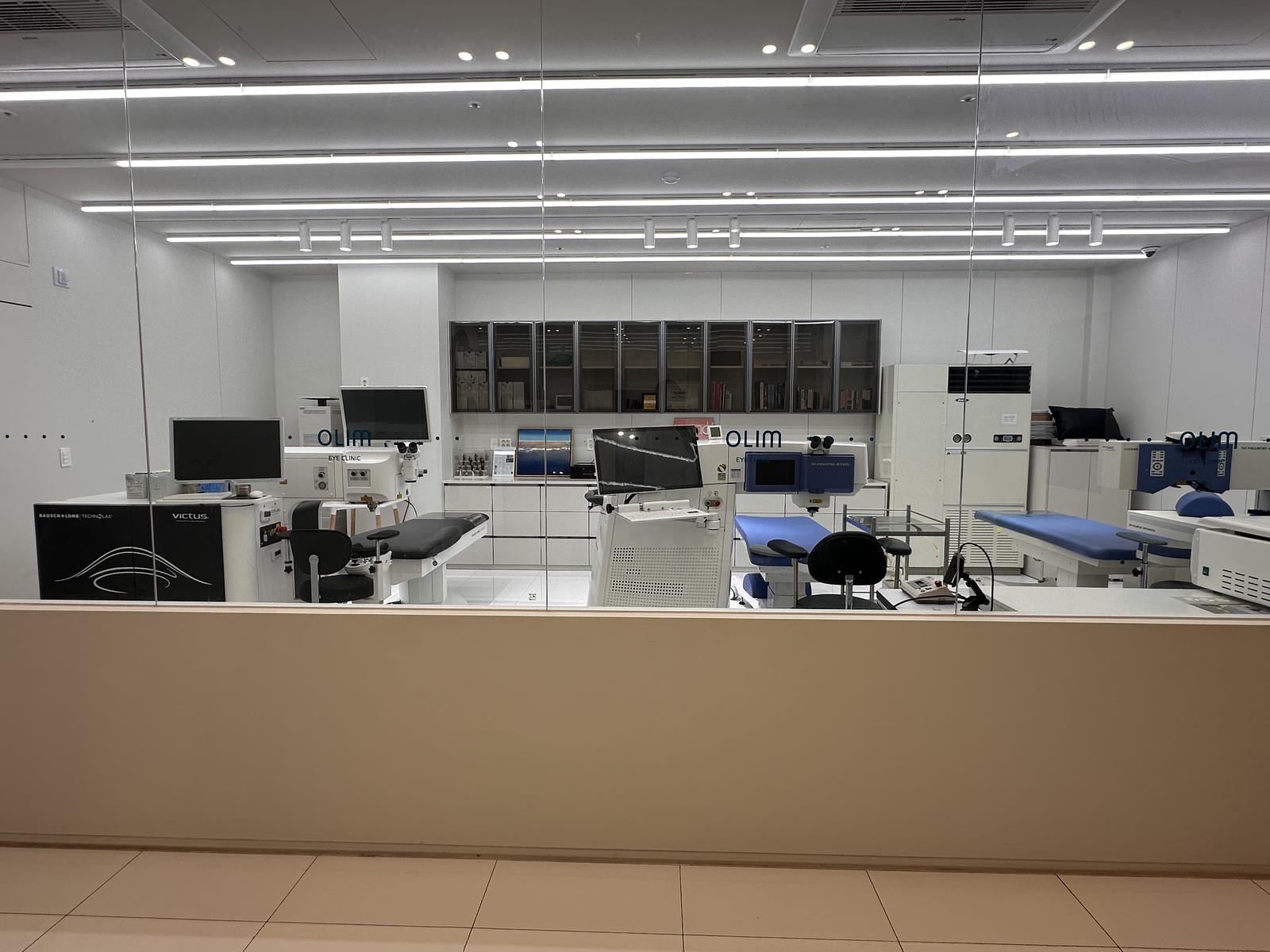
If you were turned down for LASIK because your cornea is thin, ICL is a different calculation. The lens is placed without cutting or reshaping the cornea, so corneal thickness matters less. The corneal lining and the chamber depth matter more. Our 23 devices include the OCULUS Pentacam, the IOL Master 700 and the TOPCON 3D OCT-1. If you're not sure your cornea really rules out laser, I've covered how SMILE, LASIK and LASEK suit different corneas in a separate post.
Who should wait or skip ICL for now?
In short, these are general medical reasons to hold off. Most of them are "not yet" rather than "never":
- You're under 21, or your prescription has changed noticeably in the past year.
- You're pregnant or breastfeeding. Hormones can shift your prescription for a while.
- You have inflammation or an infection in or around the eye right now.
- You have glaucoma, or eye pressure that isn't yet controlled.
- Your corneal lining cell count is low, or you have a corneal disease.
- Your chamber is shallow on measurement.
- You have diabetes with changes in the retina, or a past retinal detachment. The retina needs a full exam first.
- You're in your mid-40s or older and already reach for reading glasses.
That last group deserves its own conversation. Once the natural lens starts to age, an ICL corrects distance but leaves near vision as it is. In that case I'd usually talk about presbyopia correction instead. I also think it's better to do that before a cataract develops on top of presbyopia in your 60s.
Saying "not this year" is part of my job. If an eye doesn't need surgery, or isn't ready for it, I don't operate.
What can go wrong after ICL, and what if it happens at home?
Risks and side effects to know
In the first days and weeks, the common reactions are glare, halos or starbursts around lights at night, sensitivity to bright light, and a scratchy feeling in the eye. For many people the halos fade as the brain adjusts, but some people keep them. The night-time effects are stronger when pupils are large.
The FDA lists rarer risks for phakic lenses in general:
- a rise in eye pressure that can need medication or surgery
- a cataract in the natural lens
- faster loss of the cells that keep the cornea clear
- retinal detachment
- infection or severe inflammation
- surgery to reposition, exchange or remove the lens if its size or power turns out wrong
The FDA also notes that many people still need glasses for some tasks after surgery. How strongly any of this shows up differs from one eye to the next, and the exam decides whether your eyes are suitable at all.
Once you're back home, some signs need a same-day visit to a local ophthalmologist: sudden eye pain with headache or nausea, which can mean high pressure; vision that gets worse after it had been improving; redness that keeps increasing; or flashes, new floaters or a shadow like a curtain across your vision. Before you fly, ask for a copy of your measurements and the details of the implanted lens, so the doctor at home has your records.
Once you know which of these risks worries you most, ask about it on WhatsApp, and attach a photo of any eye-pressure or retina results you've had at home.
Your numbers decide itSend a photo of your prescription or eye exam report. The doctor reviews it.
A worked example: minus 9, a thin cornea and seven days off
Say you're 28 and teaching English in Hanoi. You're about minus 9 in both eyes with a little astigmatism, a laser consult called your cornea thin, and the school gives you one week at the end of term.
I'd start with stability. If your glasses prescription from two years ago is close to today's, that item is likely fine. Next come the numbers you can't get from an optician: chamber depth, the corneal cell count and pupil size in dim light. If the chamber is shallow, my advice would be not to have ICL on this trip, and probably not at all. If the measurements are fine, the astigmatism decides whether a toric lens is needed.
The calendar matters too. The clinic is closed on Wednesdays and Sundays. Registration for exams and surgery closes two hours before closing time, so a Friday exam has to start by 17:30 and a Saturday one by 13:00. Lunch break is 13:00 to 14:00. Before you buy the ticket, ask three things: whether surgery can follow the exam on the same trip, whether the lens power you need is in stock or has to be ordered, and how many check-ups to plan before flying.
The clinic is about 200 m from Exit 6 of Eonju Station, and hours and directions are on our English home page.
Does it matter whether the lens is called EVO?
EVO is STAAR Surgical's lens model, and the FDA approval above applies to it. The implantable lens listed on our site is ECHO ICL, which corrects very high myopia, astigmatism and hyperopia. Whatever the model name, the candidate items are about your eye: chamber depth, cell count, stability and age. If a particular model matters to you, ask about it by name.
What to send before you book anything
If you're weighing this trip, take a photo of your current prescription and one from a year or two ago, and send them on WhatsApp with your break dates. Ask which items on a Korea EVO ICL candidate list can only be measured in Seoul. At your exam, the first numbers I'll read are your chamber depth and corneal cell count, and only then will we talk about lens power.
Frequently asked questions
Can an ICL be taken out if something goes wrong?
Yes. An ICL can be repositioned, exchanged or removed, and the FDA lists this as one of the reasons people sometimes need more surgery. Removal is itself an operation inside the eye with its own risks, so treat it as a fallback, not a trial run.
I'm 43. Am I still on the list?
Possibly, but around this age the natural lens starts to lose its focusing range. An ICL would fix your distance vision and leave near vision to age as usual, so reading glasses could come soon after. The exam shows whether presbyopia correction is a better fit.
My cornea was called too thin for LASIK. Does that matter for ICL?
Much less. The lens is placed without cutting or reshaping the cornea. What matters more is the cell layer lining the cornea and the depth of the front chamber, and those need separate measurements.
What decides the cost of ICL?
The main factors are one eye or both, whether you need a toric lens for astigmatism, the exam work-up, and how many follow-up visits fit your stay. Ask on WhatsApp what it would cost for your eyes, with a photo of your prescription. Deposit and payment method are settled after the consultation, so ask about those at the same time.
Can I go back to teaching or screen work the next week?
Many people go back to desk and screen work within a few days, with some night glare at first. Swimming, eye rubbing and dusty settings usually have to wait longer. Check your own timeline at the post-op visit before you plan your first week back.
Sources
- FDA approves STAAR Surgical's EVO Visian ICL for myopia (2022) · Optometry Times
- Phakic Intraocular Lenses: What are the risks? · U.S. Food and Drug Administration
Written with AI assistance from OLIM Eye Clinic Gangnam's published information and the medical sources listed below. This article is general medical information and does not replace a diagnosis. Whether and how to operate is decided after an in-person exam.