 한국어
 English
 繁體中文
 Монгол хэл
Korea Laser Eye Surgery Cost: What If Laser Isn't Right for Your Eyes? Reviews, Methods and Recovery
In Korea, the cost of laser eye surgery follows the method your cornea allows. With a high prescription or a thin cornea, that may be LASEK or ICL, or no surgery at all.
Were you told at home that your corneas are too thin for LASIK, and now you're wondering whether any Korea laser eye surgery cost quote even applies to eyes like yours?
Read this before you compare a single quote.
You'll come away knowing which methods suit which eyes, what reviews get right and wrong, how recovery differs between methods, and what decides the cost, so you can see which option fits your numbers and your budget.
Hello, I'm Dr. Lee Ki-il, Medical Director, Ophthalmologist at OLIM Eye Clinic in Gangnam, Seoul.
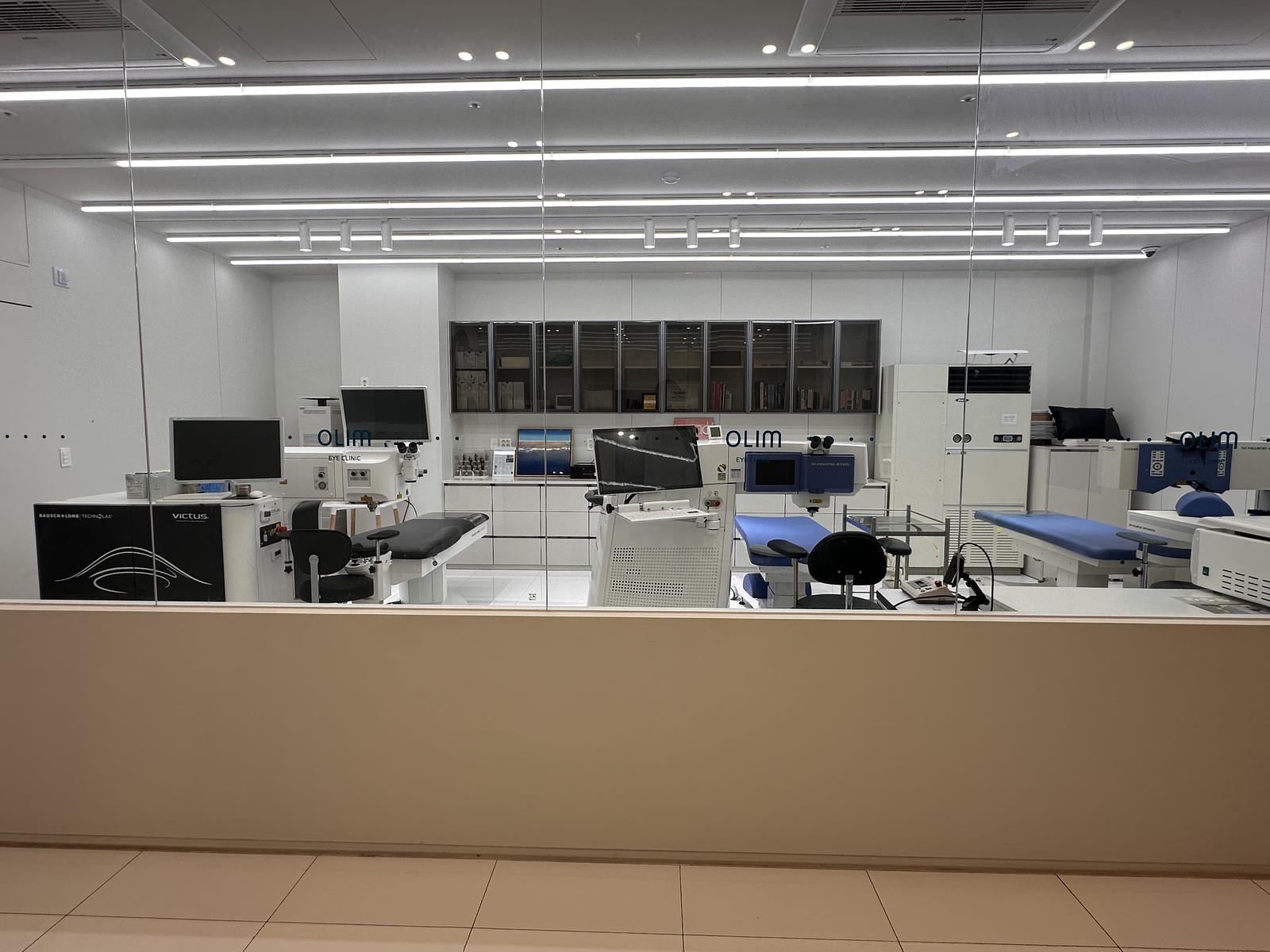
Before any surgery here, your eyes go through about 60 tests, including corneal mapping on a Pentacam. We do 5th-generation SMILE on a SCHWIND ATOS, LASIK, Contoura LASEK and ICL in one building, and I review your results and explain them to you in person.
I'm writing this because people with high prescriptions often start comparing laser prices before anyone has checked whether laser is the right method for their eyes.
What you pay for vision correction in Korea is set mostly by the method your cornea allows. With a high prescription and a thin cornea, that may be LASEK or a lens implant rather than SMILE or LASIK, and some eyes are better off with no surgery at all.
If you have a recent exam report or glasses prescription, send a photo of it on WhatsApp and ask one thing: which methods your numbers leave open, and what each would cost for your case.
Your numbers decide itSend a photo of your prescription or eye exam report. The doctor reviews it.
Why does the method change the cost more than anything else?
Laser vision correction reshapes the cornea, the clear front window of the eye, and it does that by removing tissue. The higher your prescription, the more tissue comes out. What matters for safety is how much cornea is left afterwards, because a cornea left too thin can weaken and bulge over time.
That's why your corneal thickness and your prescription have to be read together. Minus 4 on a thick cornea leaves plenty of margin. Minus 9 on a cornea that's thinner than average may leave very little, whichever laser is used.
Each method answers that problem differently, with different equipment. SMILE on the SCHWIND ATOS corrects myopia and astigmatism through a 2mm incision without a corneal flap. Contoura LASEK on the Alcon Wavelight ex500 ablates to the shape of your own cornea and preserves as much residual cornea as possible, which is why it's used for high myopia and astigmatism. ICL leaves the cornea alone: a lens goes inside the eye, in front of your natural lens, so it's a different operation with its own set of risks.
The price follows the method, so the method has to come first.
Which method fits which eye?
In short, this is the comparison I'd want a high-prescription reader to see before any quote. It's a general guide; your own maps decide.
| Your eyes | Method usually considered | What to weigh |
|---|---|---|
| Moderate prescription, healthy cornea of good thickness | 5th-gen SMILE or LASIK | Quick return to daily life for many people; both remove some tissue |
| High myopia or astigmatism, cornea on the thinner side | Contoura LASEK | Keeps more residual cornea; the first days are slower and more uncomfortable |
| Prescription too high, or cornea too thin, for any laser | ICL implantable lens | Cornea untouched; a lens inside the eye carries its own risks |
The last row is the one people skip. The Pentacam analyses corneal topography, thickness and shape so that abnormal corneas such as keratoconus show up before surgery. If I see that pattern, the conversation changes from “which laser” to “should we operate at all.”
I've written separately about how corneal thickness separates SMILE, LASIK and LASEK in Korea, if you want the laser side in more depth.
Say you're minus 9 with a thin cornea
Imagine you've worn contacts since your teens, your prescription is around minus 9 with some astigmatism, and your lenses now feel scratchy by mid-afternoon. A surgeon at home measured your corneas and said LASIK wasn't safe.
Here's how I'd reason through it. First, I'd want to know your prescription has stayed stable, because an eye that's still changing will drift after any correction. The FDA's page on when LASIK is not for you lists an unstable prescription and thin corneas among the reasons. Then I'd look at the thickness map next to your numbers. If there's enough tissue for the correction with margin to spare, Contoura LASEK might be on the table. If there isn't, ICL is the option that takes nothing from the cornea.
And if the map shows irregular steepening, I'd stop at the exam and talk about monitoring instead.
The scratchy lenses matter too. Dry eye is common in long-term contact lens wearers and can make recovery after laser harder. Our Keratograph 5M images the oil glands in the eyelids and measures how quickly the tear film breaks up, and those readings belong in the decision.
For someone in that position, there are two or three possible paths, each with its own cost, and the measurements decide which ones stay open.
If this sounds like you, send the corneal thickness readings from your home exam if you were given them, along with your prescriptions from the last two years. Ask which of these paths your numbers leave open.
Your numbers decide itSend a photo of your prescription or eye exam report. The doctor reviews it.
What decides the cost for your eyes?
Any Korea laser eye surgery cost you see online assumes a method, and for a high prescription that assumption is often the wrong one. These are the factors that move the figure for someone in your position:
- The method. SMILE, LASIK, Contoura LASEK and ICL use different devices and different steps. ICL also involves a lens chosen to your eye's measurements.
- The pre-surgery exam. About 60 tests happen at our Eye Exam Center before any surgery. Ask how the exam is handled in your quote.
- Dry eye care, if you need it. Treating dry eye before refractive surgery is common practice.
- Follow-up and medication. Ask which checkups and eye drops after surgery come with the method you're heading toward.
- Your days in Korea. Accommodation and time off are yours to plan, and the stay differs by method.
To get a figure that means something, ask on WhatsApp what it would cost for your case, for each method your eyes might suit.
What do reviews get right and wrong about cost and recovery?
Forum threads about laser eye surgery in Seoul repeat a few claims. Some hold up better than others.
“You'll see clearly the next day.” True for many people after SMILE or LASIK. Much less so after LASEK, where the surface layer has to regrow and vision usually takes longer to settle, and ICL recovery has its own timeline.
“SMILE is the upgrade worth paying for.” It has real advantages, such as a 2mm incision and no flap, but it suits particular corneas and prescriptions. A newer method can still be the wrong method for your eye.
“The price is the price.” A quote given before an exam is a quote for an assumed method. If your exam points elsewhere, the figure changes. What you should expect is to see your own measurements and have them explained; here, I go through your results with you in person.
How long is recovery after each method?
The general picture, since your plan depends on the method:
- LASIK: many people notice clearer vision within a day, with some burning or watering at first. The FDA's guidance on what to expect after LASIK includes a first follow-up within 24 to 48 hours and not rubbing your eyes.
- LASEK: the American Academy of Ophthalmology's EyeWiki on LASEK describes more discomfort in the first days and slower visual recovery than LASIK, because the surface cells have to heal.
- ICL: vision often clears quickly, but it's surgery inside the eye, and checks on eye pressure afterwards matter.
For your trip, a few facts help. Stop wearing contact lenses 1–2 weeks before vision correction so your cornea returns to its natural state; that affects the measurements. With SMILE, the exam and the surgery can happen on the same day. We're open Monday, Tuesday and Thursday 10:00–19:00, Friday 10:00–19:30 and Saturday 09:00–15:00, closed Wednesday and Sunday, and registration for exams and surgery closes two hours before closing.
You can't drive after surgery, so come with a companion or use public transport. Address and directions are on the OLIM Eye Clinic English homepage. Ask how many days to stay for your likely method before you book flights.
Risks and side effects to know
The common reactions are temporary for most people: dryness, glare, halos around lights at night and vision that fluctuates through the day. These usually ease over the first weeks to months, and dry eye can linger longer in people who already had it.
As general medicine, you should wait or skip surgery if your prescription has changed in the past year, if your cornea is thin or irregular for the correction you need, if you're pregnant or breastfeeding, or if you have severe untreated dry eye or a condition that slows healing. For ICL, the FDA's page on phakic lens risks lists cataract, raised eye pressure and loss of cells on the inner surface of the cornea among the possibilities.
If you're home and notice a sudden drop in vision, increasing pain, or redness with discharge, see an ophthalmologist near you promptly and then message us. The CDC's medical tourism guidance advises arranging follow-up care at home before you travel and carrying copies of your records, which is worth doing for eye surgery too. Results and recovery differ from person to person, and whether surgery suits you at all is settled at the in-person exam.
What to send first
One photo of your latest prescription or exam report is enough to start, and you can ask before booking anything. Send it on WhatsApp with the question that matters most to you: which methods your eyes might suit, and what that would cost for your case. When you come to Seoul, I examine your eyes, go through the results with you in person, and we choose the method together. If surgery isn't what your eyes need, I'll tell you that too.
Frequently asked questions
Can I have the exam and surgery on the same day in Seoul?
For 5th-generation SMILE, the exam and surgery can happen on the same day. For LASEK or ICL, ask about the schedule for your method when you plan your trip, and remember registration for exams and surgery closes two hours before closing time.
How long before the exam should I stop wearing contact lenses?
Stop wearing contact lenses 1–2 weeks before vision correction. Lenses change the shape of the cornea, and it needs time to return to its natural state so the measurements are accurate.
Is ICL reversible?
In general, an ICL lens can be removed or exchanged, but that is another operation inside the eye with its own risks. It's better thought of as a long-term option than a trial.
My surgeon at home said no to LASIK. Is it worth asking again in Korea?
It can be, if you want to know whether another method such as LASEK or ICL is open for your eyes. Your home surgeon may well have been right about LASIK, and the answer here can also be that surgery isn't advisable.
Which days is OLIM Eye Clinic open?
Monday, Tuesday and Thursday 10:00–19:00, Friday 10:00–19:30 and Saturday 09:00–15:00, with a lunch break 13:00–14:00. The clinic is closed on Wednesdays and Sundays.
Sources
- When is LASIK not for me? · U.S. Food and Drug Administration
- What should I expect during and after surgery? (LASIK) · U.S. Food and Drug Administration
- LASEK · American Academy of Ophthalmology (EyeWiki)
- Phakic Intraocular Lenses: What are the risks? · U.S. Food and Drug Administration
- Medical Tourism · U.S. CDC
Written with AI assistance from OLIM Eye Clinic Gangnam's published information and the medical sources listed below. This article is general medical information and does not replace a diagnosis. Whether and how to operate is decided after an in-person exam.