 한국어
 English
 繁體中文
 Монгол хэл
Korea SMILE Pro Price: Paying for the Laser Name? Reviews, Methods and Recovery
SMILE Pro is ZEISS's name for lenticule surgery on its VisuMax 800 laser. In Seoul, the figure on any quote mostly reflects which surgery your corneas allow, what the exam and aftercare include, and your days in Seoul.
Is the Korea SMILE Pro price in your inbox telling you what you'd actually pay for, or only which laser sits in the operating room?
Read this before you line those quotes up side by side.
By the end you'll know what moves the cost of this surgery in Seoul, what reviews get right and wrong, how the methods differ, and what recovery looks like on a short trip, so you can tell which quote fits your eyes and your budget.
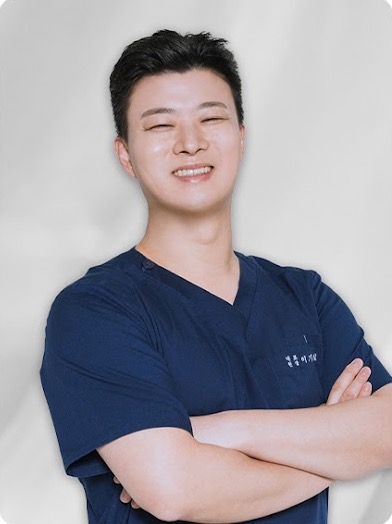
Hello, I'm Dr. Lee Ki-il, Medical Director and ophthalmologist at OLIM Eye Clinic in Gangnam.
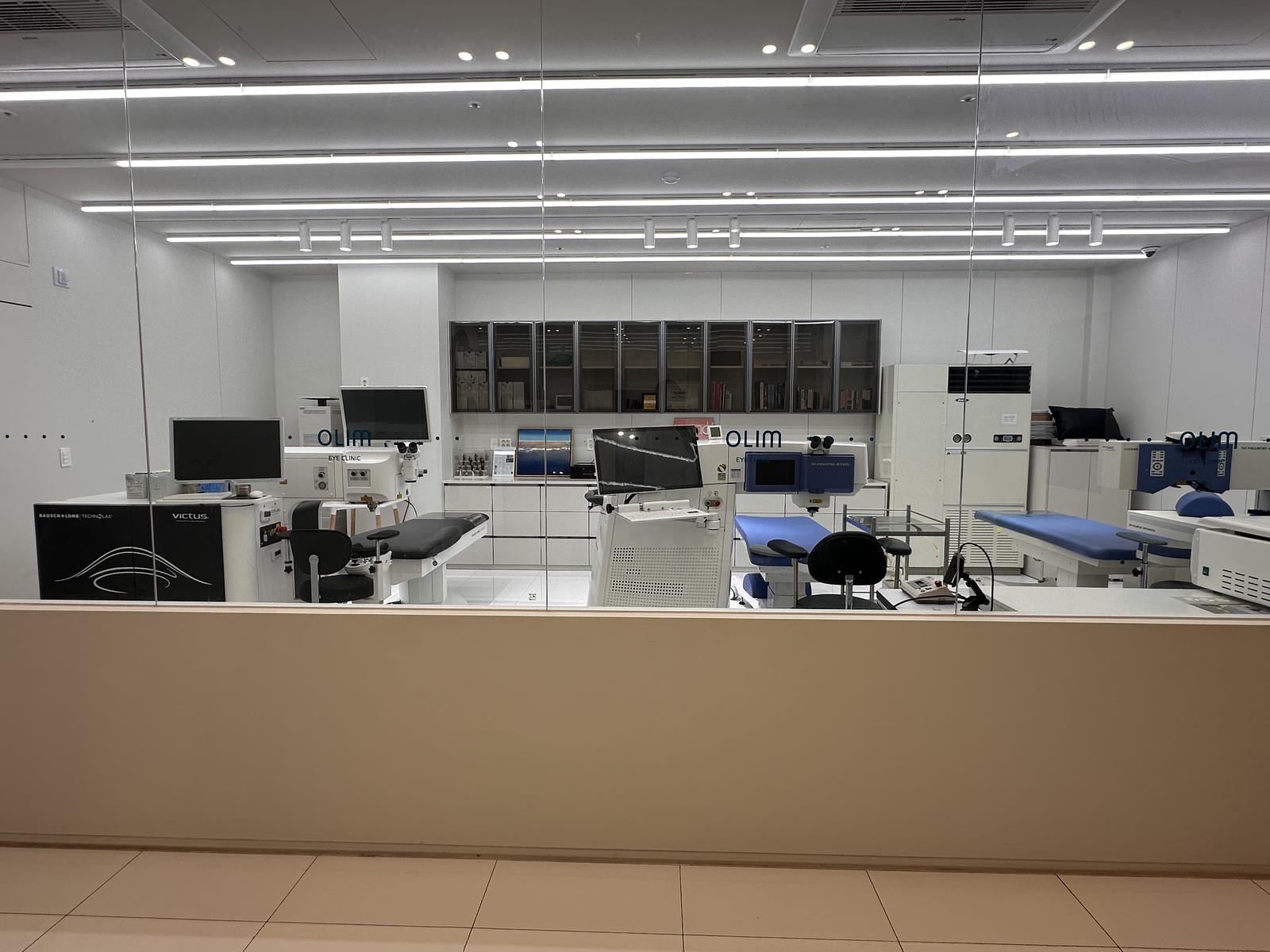
I perform 5th-generation SMILE on Germany's SCHWIND ATOS through a 2mm incision, and the exam and surgery can happen on the same day. Before any surgery, the exam here runs about 60 tests, and I review and explain the results to you in person.
I'm writing this because people often rank quotes by the laser's name and skip the lines that change both the figure and how their eyes are looked after.
SMILE Pro is the name ZEISS uses for lenticule surgery on its VisuMax 800 laser, and it isn't the platform I use. On any quote, Pro or not, the figure mostly reflects which surgery your corneas allow, what the exam and aftercare include, and how long follow-up keeps you in Seoul.
If you have a recent glasses prescription, send a photo of it on WhatsApp with the dates you could be in Seoul, and ask what it would cost for your case. Starting from your own numbers keeps the question about your eyes rather than a menu line.
Your numbers decide itSend a photo of your prescription or eye exam report. The doctor reviews it.
What is SMILE Pro, and how does it relate to 5th-generation SMILE?
SMILE stands for small incision lenticule extraction. A femtosecond laser shapes a thin disc of tissue, the lenticule, inside the cornea, and the surgeon removes it through a small opening, so no flap is lifted the way it is in LASIK. A review by Reinstein and colleagues in Eye and Vision traces how the technique grew out of earlier flap-based lenticule methods.
“5th-generation SMILE” is how we describe lenticule surgery on the SCHWIND ATOS, which corrects myopia and astigmatism without a corneal flap, using real-time 7D eye tracking and low energy tailored to your cornea.
So two names on two quotes usually mean two manufacturers' lasers for the same kind of operation. The name tells you which machine is in the room. It doesn't tell you whether your cornea suits lenticule surgery in the first place, and that question decides the cost before anything else does.
Can the quote change once your corneas are measured?
Yes. A figure sent before an exam assumes you're a candidate. One of the devices here, the OCULUS Pentacam, analyzes corneal topography, thickness and shape to detect abnormal corneas such as keratoconus before surgery. A cornea that's thin for your prescription, or one that steepens in an irregular pattern, is a reason to stop and rethink before any laser removes tissue.
When the map points elsewhere, the conversation moves to a different operation with a different cost. That might be LASEK, where the Alcon Wavelight ex500's Contoura ablation follows the shape of your own cornea and preserves as much residual cornea as possible, or ICL, a lens placed inside the eye without removing corneal tissue. I go through the cornea-based choices in more detail in how your cornea decides between SMILE, LASIK and LASEK.
The US Food and Drug Administration's page on when LASIK is not for you lists an unstable prescription, pregnancy, certain diseases and thin corneas among the reasons to hold back, and the same questions apply to any laser that reshapes the cornea. Treat any figure you get before measurement as provisional.
Which five questions should you ask any clinic about its quote?
In short, these work for any clinic in Seoul, including mine.
- Which surgery and which laser is this figure for? “SMILE” on a quote without a platform name leaves you guessing.
- Is the pre-op exam part of this figure, and what does it measure? At minimum you want corneal thickness and shape.
- What's included after surgery? Eye drops, the number of check visits in Seoul, and what happens if a touch-up is ever needed.
- If the exam rules this surgery out, what changes? Ask which alternative would be considered and whether the exam is charged on its own in that case.
- Who examines me, and who operates?
My own answer to the last one: as Medical Director I'm responsible for consultations and surgery, and I review and explain your test results in person. Optometrists and counselors work with me as a dedicated team, from your exam through post-op care.
What moves the price of SMILE in Seoul for your eyes?
A search for Korea SMILE Pro price brings up figures. What you need is the list of what sits behind one:
- The surgery your exam supports. SMILE, LASIK, LASEK and ICL are different operations with different costs, and the exam decides which of them are on the table.
- Your prescription and astigmatism. Some clinics charge the same across prescriptions; others don't. Ask whether yours changes the figure.
- What the exam covers. The exam here runs about 60 tests before any surgery. Ask any clinic what its exam includes and whether it's billed separately.
- Aftercare. Drops, check visits, and the arrangement if you need to be seen again.
- Your days in Seoul. Hotel nights and flight dates are part of your real cost, and they're set by when your follow-up checks fall.
To get the figure for your own case, ask on WhatsApp what it would cost for you, and mention whether your current prescription includes astigmatism.
Three quotes, one prescription: how I'd read them
Say you work in Singapore, you're minus 5.25 in both eyes with a little astigmatism, and three Seoul quotes are open on your screen: one says SMILE Pro, one says 5th-generation SMILE, one says LASEK. The instinct is to rank them by the figure at the bottom.
I'd start somewhere else. A prescription around minus 5 is within the range where lenticule surgery is commonly considered, but only if your corneal thickness and shape allow it, and none of the three quotes knows that yet. Next, I'd hold each quote against the five questions above; two quotes that look alike can cover different exams and different numbers of check visits.
The LASEK quote isn't a lesser option by default. Surface treatment needs no flap or incision, but the outer layer of the cornea has to grow back, so the first few days are usually more uncomfortable and vision clears more slowly, as the American Academy of Ophthalmology's EyeWiki entry on LASEK describes. On a short trip, that slower start matters for your calendar.
Then the calendar itself. The clinic is closed on Wednesdays and Sundays, so a surgery on a Tuesday or a Saturday pushes the next open day back. Ask when your first check after surgery would fall before you book the flight.
What do reviews get right about SMILE, and what do they leave out?
“The laser takes seconds.” Broadly true for the laser itself. Your day is longer: measurements, waiting, the explanation of your results, then surgery.
“No dry eye with SMILE.” Because there's no flap, fewer corneal nerves are cut, and many people notice less dryness early on than after LASIK. Less isn't none. Plenty of people use lubricating drops for weeks, and some for longer, especially if their eyes were dry before surgery.
“Pro means sharper vision.” A newer laser changes speed and workflow in the operating room. How well you see afterward depends far more on your cornea, your prescription, the planning and your healing than on the badge on the machine.
How does recovery go on a short trip?
For many people, vision is hazy for the first hours and good enough to get around by the next day, then keeps settling over the following weeks. Light sensitivity, a scratchy feeling and halos around lights at night are common in the first days. Rubbing your eyes is the habit to break at once; the incision is small, but it's still healing.
The clinic is about 200m from Exit 6 of Eonju Station, and the OLIM Eye Clinic English homepage has hours and directions you can check against your flight times.
If your dates are fixed, message us on WhatsApp with the weekday you land and the weekday you fly out, and ask which day your first check after surgery would fall on.
Your numbers decide itSend a photo of your prescription or eye exam report. The doctor reviews it.
Risks and side effects to know
Common and temporary: dryness, glare or halos at night, vision that fluctuates in the first days to weeks, and a gritty feeling. Less common: a leftover prescription that leaves you slightly under- or over-corrected, which may mean glasses for some tasks or further treatment later. Rare but serious: infection, inflammation beneath the corneal surface, and ectasia, a weakening and bulging of the cornea that pre-op mapping is meant to screen for.
Who should wait or skip it, as general medicine: anyone whose prescription is still changing, people with thin or irregularly shaped corneas or signs of keratoconus, anyone pregnant or breastfeeding, and people with uncontrolled autoimmune disease or severe untreated dry eye. Healing and results differ from person to person, and the in-person exam decides suitability.
Once you're home, sudden pain, worsening vision, a red eye that's getting worse, or discharge needs an ophthalmologist the same day. The CDC's advice for medical tourists is to carry copies of your records and arrange follow-up care at home before you travel. I'd add one step: book a check with a local eye doctor for the week you return.
Sending your first message
On WhatsApp, send a photo of a corneal map or exam report if you've had one done at home, along with the one thing you most want to know, for instance which weekdays work for a same-day exam and surgery. One photo is enough to start, and you can ask before booking anything. When you come to Seoul, I'll examine your eyes, go through the results with you, and recommend the surgery that fits them.
Frequently asked questions
Does OLIM Eye Clinic offer SMILE Pro?
No. I perform 5th-generation SMILE on the SCHWIND ATOS. SMILE Pro refers to lenticule surgery on ZEISS's VisuMax 800 laser. Both belong to the same family of flapless surgery, and the exam decides whether that family suits your cornea.
Can I have the exam and SMILE on the same day?
Yes, the exam and surgery can be done on the same day when the results support it. Hours are Mon, Tue and Thu 10:00–19:00, Fri 10:00–19:30 and Sat 09:00–15:00, with lunch 13:00–14:00 and closed Wednesdays and Sundays. Registration for exams and surgery closes 2 hours before closing.
Which other methods are there if SMILE doesn't suit my eyes?
LASIK, LASEK and ICL are also on the menu here. For LASEK, the Alcon Wavelight ex500's Contoura ablation follows the shape of your cornea and preserves as much residual cornea as possible. ICL places a lens inside the eye instead of reshaping the cornea.
Should I stop wearing contact lenses before the exam?
Ask on WhatsApp how long to stop for your lens type before you book.
Where is the clinic?
2F–5F, Rian Building, 546 Nonhyeon-ro, Gangnam-gu, Seoul, about 200m from Exit 6 of Eonju Station.
Sources
- Small incision lenticule extraction (SMILE) history, fundamentals of a new refractive surgery technique and clinical outcomes (Reinstein DZ, Archer TJ, Gobbe M. Eye Vis 2014;1:3) · Eye and Vision (via PubMed Central)
- When is LASIK not for me? · U.S. Food and Drug Administration
- LASEK · American Academy of Ophthalmology (EyeWiki)
- Medical Tourism · U.S. Centers for Disease Control and Prevention
Written with AI assistance from OLIM Eye Clinic Gangnam's published information and the medical sources listed below. This article is general medical information and does not replace a diagnosis. Whether and how to operate is decided after an in-person exam.