 한국어
 English
 繁體中文
 Монгол хэл
EVO ICL Surgery Cost in Korea at 40-Plus: What Decides It? Reviews, Methods and Recovery
What an ICL costs you in Korea comes down to the lens your eyes need, the measurements that size it, one eye or both, and your follow-up days in Seoul. In your 40s, presbyopia changes the conversation too.
Is EVO ICL surgery cost in Korea worth researching when you're in your 40s, your prescription is too high for laser, and you've started holding menus at arm's length?
Give this ten minutes before you line up quotes.
You'll come away knowing what decides the cost of a lens implant for your eyes, which lens methods make sense at your age, which review claims hold up, and what recovery looks like on a trip. That should tell you whether an ICL or another lens-based plan fits your age and your budget.
Hello, I'm Dr. Lee Ki-il, Medical Director and ophthalmologist at OLIM Eye Clinic in Gangnam. I hold an adjunct professorship at Seoul St. Mary's Hospital, The Catholic University of Korea, and I was a research professor in ophthalmology at the State University of New York.
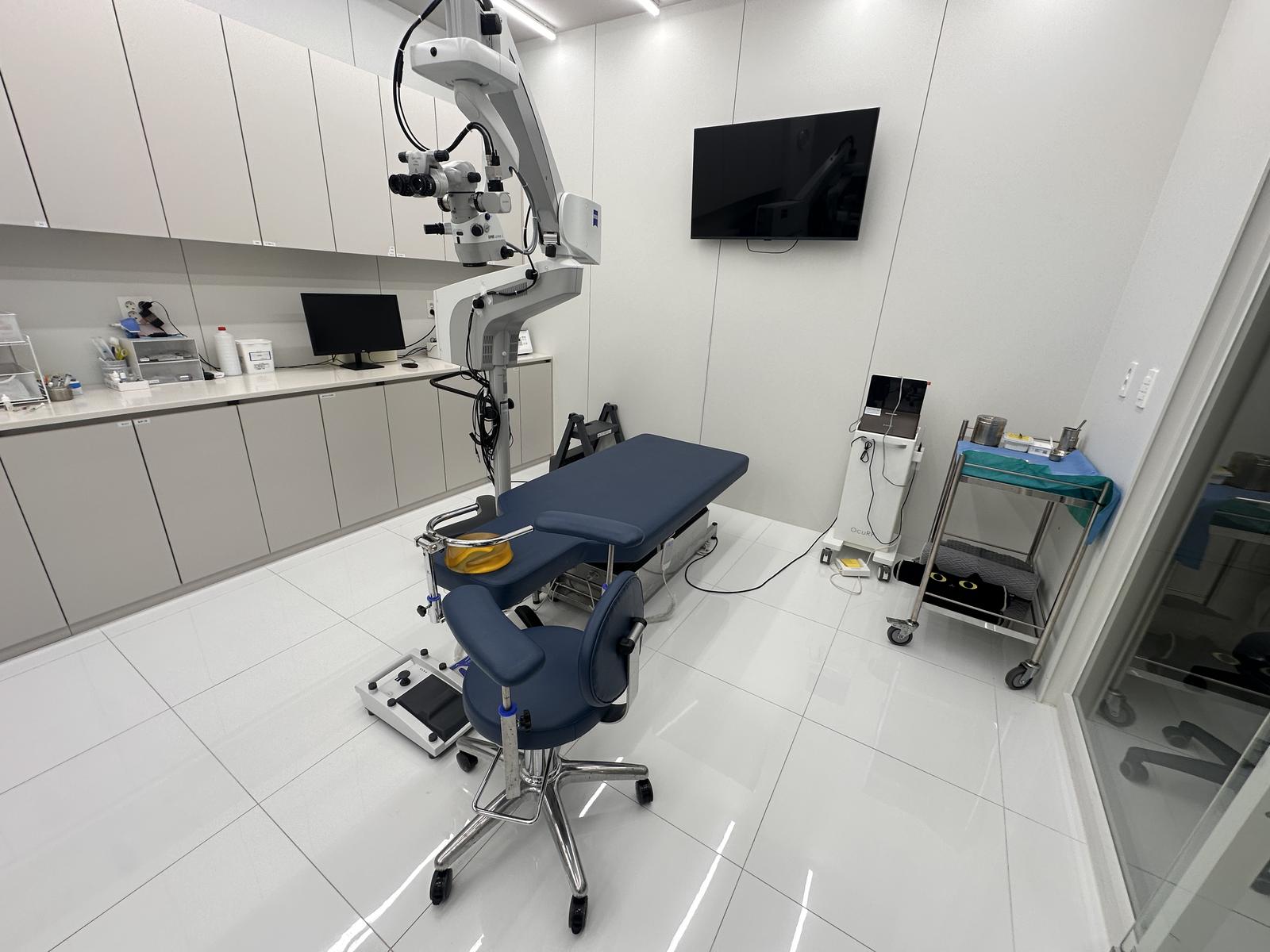
The ICL I offer is the ECHO ICL, which corrects very high myopia, astigmatism and even hyperopia. The exam before any surgery runs about 60 tests, including OPTOS wide-field imaging of the peripheral retina, and presbyopia and cataract surgery happen in the same building.
I wrote this because people in their 40s often price an ICL as if it were the same operation a 25-year-old gets, when the lens inside their own eye has already started to change.
The cost of an ICL comes down to the lens type your eyes need, the measurements that size it, whether both eyes are treated, and how many follow-up days you plan in Seoul. Past about 45, the more useful question is often whether an implant in front of your own lens is the right plan at all.
Send a photo of your current glasses prescription on WhatsApp, add your age, and ask whether an ICL or a presbyopia-focused plan is the conversation to have. You can ask before booking anything.
Your numbers decide itSend a photo of your prescription or eye exam report. The doctor reviews it.
Why does age change the ICL conversation?
An ICL is a thin lens placed behind the iris and in front of your own lens. It removes no corneal tissue, which is why it's used for prescriptions beyond what laser can treat. It corrects distance focus. It does nothing about the gradual stiffening of your own lens that the American Academy of Ophthalmology describes as presbyopia, which usually starts to show sometime after 40.
The US label shows how much age matters. Those limits come from the US label, and the reasoning behind them applies to any eye.
The first number I'd want for a 40-plus candidate is the depth of the space the lens has to sit in, ahead of the prescription itself. Right after that comes how clear your own lens still is. An implant in front of a lens that is starting to cloud can mean a second operation within a few years.
Lens options compared by eye and age
| Your eyes | Plan often discussed | What to weigh |
|---|---|---|
| Under about 45, high myopia, clear lens, enough chamber depth | ICL | Raised eye pressure and cataract are known risks |
| High myopia with astigmatism | An ICL design that also corrects astigmatism | The lens must sit at the right angle; a rotated lens may need repositioning |
| Mid-40s or older, trouble reading, early lens clouding | Presbyopia or cataract evaluation | Works on your own lens; a different operation altogether |
| Moderate myopia, thick enough cornea | Laser: Contoura LASEK or SMILE | Uses corneal tissue; recovery differs by method |
On names: EVO ICL is the lens named in that 2022 US approval. The ICL listed at OLIM is the ECHO ICL. If you're comparing quotes, ask each clinic for the exact lens model, and whether the astigmatism-correcting version is the one you'd receive.
If the exam shows your cornea could take a laser after all, I've covered how the cornea decides between SMILE, LASIK and LASEK in a separate post.
A typical case at 44
Say you're 44, about minus 11 in both eyes with 2 diopters of astigmatism, and you already take your glasses off to read your phone. An ICL could correct the distance and the astigmatism. That habit of reading without glasses would go, though, and with presbyopia advancing you'd likely reach for readers within a few years. If your lens already shows early clouding, I'd steer the conversation toward cataract evaluation instead, because the FDA notes that later cataract surgery may mean removing both your own lens and the implant.
If you've had an eye exam in the past year, send the page showing your prescription and any note about early cataract or eye pressure, and ask which row of that table your eyes sit in.
Your numbers decide itSend a photo of your prescription or eye exam report. The doctor reviews it.
What decides the EVO ICL surgery cost in Korea for your eyes?
Five things move the figure:
- Lens type. A lens for nearsightedness alone, or one that also corrects astigmatism or hyperopia.
- Sizing measurements. The lens is chosen to fit your eye's internal dimensions, so the pre-op exam (about 60 tests here) is part of the picture. Ask whether a quote includes it.
- Follow-up visits in Seoul. Eye pressure is usually checked soon after ICL surgery, and each visit is a day you need to be in town.
- Aftercare at home. Drops for the following weeks, and longer-term checks of eye pressure and the corneal cells with an eye doctor where you live.
For the figure in your case, ask on WhatsApp what it would cost, and ask which lens model that figure is for.
What do ICL reviews claim, and which parts hold up?
'It's reversible.' Partly. The lens can be removed or replaced, but the FDA's page on phakic lens risks points out that each extra surgery carries risks of its own.
'I'll never need glasses again.' Not something to count on. The FDA notes many people don't reach 20/20 and some still need glasses, even for reading. Over 40, presbyopia adds to that.
'Halos around lights at night.' Real for some people. Glare, halos and weaker vision in dim light are on the FDA's list, mostly noticed when driving at night or in fog.
'I flew home two days later.' It happens; whether it suits you rests on how your follow-up visits go.
How many days in Seoul should I plan for ICL recovery?
ICL surgery is usually done under numbing drops, and many people see clearly enough for daily tasks within a day or two, with some haze at first. The early checks are about eye pressure and lens position, so your days in Seoul follow those visits rather than the operation itself.
Work backward from your flight. If you land on a Tuesday night, Wednesday is a closed day, so Thursday is the earliest exam. Registration for exams and surgery closes two hours before closing time, and on Saturdays we close at 15:00. Stop wearing contact lenses 1 to 2 weeks before vision correction surgery, which means switching to glasses before you pack.
We're about 200m from Exit 6 of Eonju Station. You won't be able to drive after surgery, so plan on the subway or a companion. Ask at booking how many checkups your plan needs before you fly, and add a spare day. Current hours and the map are on the OLIM Eye Clinic English site.
Risks and side effects to know
In the first days and weeks, glare, halos, light sensitivity and a scratchy feeling are common, and vision can be hazy before it settles.
As general medicine, an ICL is usually postponed or ruled out when the prescription hasn't been stable for a year, the space in front of your own lens is shallow, a cataract is already forming, eye pressure is high or glaucoma is present, there's a history of inflammation inside the eye, or you're pregnant or breastfeeding. The FDA's list of less common but serious problems includes raised eye pressure needing treatment, clouding of the cornea from cell loss, cataract, retinal detachment, and infection or severe inflammation. These differ from person to person, and the in-person exam decides whether you're a candidate.
After you fly home, see an eye doctor the same day for severe eye pain with headache or nausea, a sudden blur, new flashes or floaters, a shadow across your vision, or redness that spreads. Bring a record of the lens model and power. The CDC's medical tourism guidance is to carry copies of your records and arrange follow-up at home before you travel. We keep monitoring eyes with regular checkups after surgery; ask at booking how that works once you're home.
Before your first message
Send your age and travel dates on WhatsApp with one question: is an ICL the right lens plan at my age, and what would it cost for my case? A short message is enough, and you can ask before you book a flight. When you come, I'll explain your exam results in person and recommend the surgery your eyes need, whether that turns out to be an ICL or a different plan.
Frequently asked questions
Is the ECHO ICL the same lens as the EVO ICL?
They are different names. EVO ICL is the name in STAAR Surgical's 2022 US approval; the ICL listed at OLIM is the ECHO ICL. When comparing quotes, ask each clinic for the exact lens model and whether it corrects astigmatism.
Can I get an ICL after 45?
The US approval of the EVO Visian ICL covers ages 21 to 45. After that age, presbyopia and early lens changes usually come into the decision, and a presbyopia or cataract evaluation may be the more useful conversation.
Will I still need reading glasses after an ICL?
Likely, if you're over 40. An ICL corrects distance focus, and presbyopia keeps progressing in your own lens. Nearsighted people who now read by taking their glasses off often need readers after distance correction.
What happens to the ICL if I need cataract surgery later?
The FDA notes that cataract surgery after a phakic lens may mean removing both your own lens and the implant. That's one reason the clarity of your lens is checked before an ICL.
Does ICL surgery hurt?
It's usually done under numbing drops, and most people describe pressure rather than pain. A scratchy feeling and light sensitivity are common for the first days. Severe pain with headache or nausea afterward needs an eye doctor the same day.
Sources
- Phakic Intraocular Lenses: What are the risks? · U.S. Food and Drug Administration
- FDA approves STAAR Surgical's EVO Visian ICL for myopia (2022) · Optometry Times
- What Is Presbyopia? · American Academy of Ophthalmology
- Medical Tourism · U.S. Centers for Disease Control and Prevention
Written with AI assistance from OLIM Eye Clinic Gangnam's published information and the medical sources listed below. This article is general medical information and does not replace a diagnosis. Whether and how to operate is decided after an in-person exam.