
 한국어
 English
 繁體中文
 Монгол хэл
Cataract Surgery Cost Korea: What Decides It? Reviews, Methods and Recovery
The cost of cataract surgery in Korea is set mainly by the lens, whether one or both eyes are treated, any femtosecond laser step, and the exam and check-up days you need in Seoul.
Is the cataract surgery cost Korea clinics list online the number you'll actually pay once your eyes have been measured?
Read this before you line up quotes or book a flight to Seoul.
By the end you'll know what decides the cost, what reviews get right and wrong, how the surgical methods differ and what recovery means for your flight home, so you can see which plan fits your eyes and your budget.
Hello, I'm Dr. Lee Ki-il, Medical Director and ophthalmologist at OLIM Eye Clinic in Gangnam, Seoul. My clinical work and research center on cataract and refractive surgery.
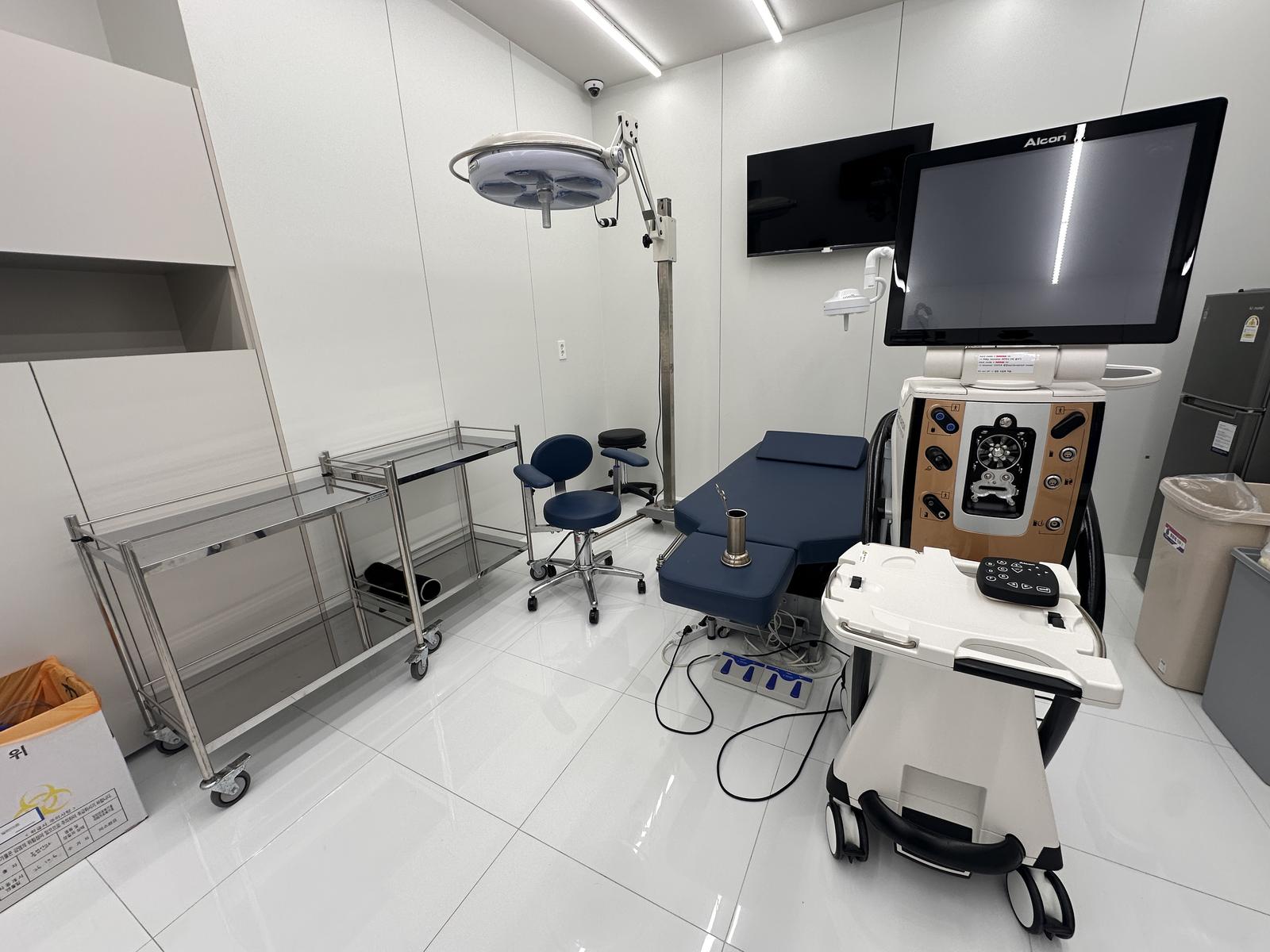
We perform cataract surgery with the VICTUS femtosecond laser and the ALCON CENTURION, through a small incision that doesn't need stitches. Before any surgery, our comprehensive eye exam runs about 60 tests, and we recommend only the surgery your eyes need.
I'm writing this because many people compare cataract quotes before anyone has measured their eyes, and it's the measurements that set the plan.
The cost of cataract surgery in Korea moves with four things: the lens implanted, whether one or both eyes are treated, whether a femtosecond laser step is used, and how many exam and check-up days you spend in Seoul. A figure that means something for you comes once those are known.
If you have a cataract diagnosis from home, send a photo of that report on WhatsApp with the one question bothering you most, such as which lens types are worth reading about. With your own report in hand, the question you ask is about your eyes.
Your numbers decide itSend a photo of your prescription or eye exam report. The doctor reviews it.
What decides cataract surgery cost in Korea?
A cataract operation removes the clouded natural lens and puts an artificial intraocular lens (IOL) in its place. The time in the operating room is usually short. The cost is shaped by what surrounds those minutes: the lens, the measurements, the number of eyes and the days of care. That's why a search for “cataract surgery cost Korea” rarely ends in one number.
| What decides it | Why it moves the cost | What to ask |
|---|---|---|
| Lens type | Monofocal, toric (for astigmatism) and lenses that spread focus across distances are different products | Which lens types would be considered for my eye |
| One eye or both | Two eyes means two operations, usually on separate days | Whether both eyes need surgery now |
| Femtosecond laser step | Some steps can be done with a laser instead of by hand | Whether a laser step is planned for my eye, and why |
| Pre-op exam findings | Retina or optic nerve findings can add tests or treatment | What the exam covers |
| Days in Seoul | More check-ups before you fly means more days on the trip | How many check-ups to plan before my flight |
The American Academy of Ophthalmology describes cataract surgery as usually done with numbing eye drops, sometimes with medicine to help you relax. Ask whether sedation is part of your plan.
How to get the figure for your own eyes
Ask on WhatsApp what it would cost for your case. Include a photo of your diagnosis or latest eye exam, say whether you're asking about one eye or both, and mention any astigmatism you've been told about, because it changes which lenses come up.
The lens is where most of the difference sits
The American Academy of Ophthalmology's overview of intraocular lens types separates them into a few families. A monofocal lens is set for one distance, so reading glasses usually stay in your life if it's set for distance. A toric lens corrects astigmatism. Multifocal and extended-depth-of-focus lenses spread focus to reduce reliance on glasses, and for some people they bring halos or glare around lights at night.
I'd match the lens to how you live before matching it to a budget. Someone who drives at night a lot and doesn't mind reading glasses is a different conversation from someone who rarely drives after dark and wants to read a menu without glasses.
Lens power is calculated from measurements of your eye's length and the curve of the cornea. We have an IOL Master 700, which calculates intraocular lens power without touching the eye.
If your natural lens is still clear and you mainly want to stop wearing glasses, cataract surgery may not be your question at all. My post on SMILE LASIK in Korea, or LASIK, or LASEK covers that decision. In your 40s and 50s, presbyopia surgery is also possible without a cataract.
Laser-assisted or ultrasound only: which method?
Standard cataract surgery uses ultrasound to break the clouded lens into small pieces and remove them, a technique called phacoemulsification. In laser-assisted surgery, a femtosecond laser makes some of the opening cuts and softens the lens first, and ultrasound finishes the work. We have both systems: the VICTUS femtosecond laser and the ALCON CENTURION.
My view is that the laser makes certain steps more reproducible, and that can help in some eyes. For many eyes, ultrasound surgery done well gives similar vision. So treat the laser step as a question to ask (why for my eye?) rather than a tier to buy up.
What do cataract surgery reviews get right and wrong?
Review threads tend to repeat the same few claims. Some hold up; others leave out the part that affects your plan.
“The surgery took fifteen minutes.” The operating time is often short, so this is usually true. What reviews skip is the measuring beforehand. At our clinic, registration for exams and surgery closes 2 hours before closing time, which tells you the exam side takes a while.
“The laser version is the upgrade.” Partly. It's a different way to do certain steps, and its value is specific to the eye, as above.
Reviews rarely name the lens, and the lens is the biggest variable.
“I flew home two days later and was fine.” That's one eye's story. When you can fly is a question about how your eye looks at its check-ups, so it can't be copied from someone else's trip.
A worked example: two eyes, one trip
Say you're 67, live in Vancouver, have cataracts in both eyes, wear glasses for moderate astigmatism and still drive at night. Here is how I'd reason through it.
Risks and side effects to know
The astigmatism puts a toric lens in the conversation. The night driving makes me cautious about lenses that spread focus, because halos around headlights are the trade-off people notice most. Both eyes usually means two operations on separate days, and whether both fit one trip comes down to what the exam finds and how long you can stay.
Then the calendar. We're closed Wednesdays and Sundays, so if you land on a Tuesday evening, Thursday is your first exam day, and registration for exams that day closes at 17:00. You can't drive after surgery, so plan on a companion or public transport; the clinic is about 200m from Exit 6 of Eonju Station.
How long is recovery, and when can you fly home?
The US National Eye Institute notes that itching and mild discomfort for a couple of days are normal, and that most people are fully healed within about 8 weeks. You'll usually use prescribed eye drops for several weeks and need to avoid rubbing the eye. Many people notice clearer vision within the first days.
The concern is how many check-ups you need before you leave. We keep monitoring eyes with regular checkups after surgery, but once you're home, later visits will be with an ophthalmologist near you, so line one up before you travel.
What can go wrong, and who looks after you at home?
In the first days, grittiness, redness, hazy vision and light sensitivity are common and usually settle. Less common but serious problems include infection inside the eye, inflammation, swelling of the central retina, raised eye pressure and retinal detachment. Months or years later, some people develop clouding of the capsule behind the new lens; a short YAG laser treatment usually clears it, and that would most likely happen at home.
Some people should wait or be assessed first: anyone with an active eye infection or inflammation, diabetes that is affecting the retina, or glaucoma or macular disease that may limit what a new lens can give. Whether surgery suits your eyes is decided by the in-person exam, and results differ from eye to eye.
Once home, a sudden drop in vision, pain that gets worse, spreading redness, or new flashes, floaters or a shadow across your vision mean seeing an ophthalmologist the same day. Carry a copy of your surgical record with the lens model and power. The CDC's medical tourism guidance also recommends getting copies of your records and planning follow-up care before you travel.
Before you book flights, send the dates you could be in Seoul on WhatsApp and ask how many check-ups to plan before flying home. With that number you can cost the whole trip: the surgery and the days around it.
Your numbers decide itSend a photo of your prescription or eye exam report. The doctor reviews it.
Why I'd rather measure first
Our comprehensive exam covers about 60 tests, including retina and glaucoma checks.
I review your results and explain them to you in person. If your eyes are better suited to ongoing care than surgery, we'll tell you so. You can see the clinic floors, the devices and my profile on OLIM Eye Clinic's English homepage.
If you're unsure where to start, one photo of your current glasses prescription is enough to open the conversation on WhatsApp, and you can ask before booking anything. Ask which lens types you should be reading about for your eyes. When you come, I examine your eyes and recommend only the surgery they need.
Frequently asked questions
Is cataract surgery done under general anesthesia?
Usually not. Cataract surgery is commonly done with numbing eye drops, sometimes with medicine to help you relax. Ask whether sedation is part of your plan when you ask about cost.
Can both eyes be operated on during one trip to Seoul?
Whether both fit one trip comes down to your exam findings and how long you can stay, so share your dates when you ask.
Which days is OLIM Eye Clinic open?
Mon, Tue and Thu 10:00–19:00, Fri 10:00–19:30 and Sat 09:00–15:00, with a 13:00–14:00 lunch break. We're closed Wednesdays and Sundays. Registration closes 2 hours before closing for exams and surgery.
I'm in my 50s and mostly struggle with reading. Is that a cataract question?
Not necessarily. Presbyopia surgery is possible in your 40s and 50s even without a cataract. The exam shows whether your natural lens is already clouding.
Is the eye exam from my home doctor enough?
It's a useful starting point to share. Lens power is calculated from measurements of your own eye taken before surgery, and our pre-surgery exam includes about 60 tests.
How do I get to the clinic?
We're at 2F–5F, Rian Building, 546 Nonhyeon-ro, Gangnam-gu, Seoul, about 200m from Exit 6 of Eonju Station. Valet parking is available.
Sources
- Cataract Surgery · National Eye Institute (NIH)
- IOL Implants: Lens Replacement After Cataracts · American Academy of Ophthalmology
- What Is Cataract Surgery? · American Academy of Ophthalmology
- Medical Tourism · U.S. Centers for Disease Control and Prevention
Written with AI assistance from OLIM Eye Clinic Gangnam's published information and the medical sources listed below. This article is general medical information and does not replace a diagnosis. Whether and how to operate is decided after an in-person exam.