
 한국어
 English
 繁體中文
 Монгол хэл
LASIK Cost Korea: What Moves the Number for Your Eyes? Methods, Reviews and Recovery
In Korea, what vision correction costs you starts with which method your cornea can take: LASIK, Contoura LASEK, SMILE or ICL. With a high prescription, that answer can change the whole quote.
Is the LASIK cost Korea clinics quote online even relevant to you, when a surgeon back home has already said your prescription or your corneas make LASIK a poor idea?
Read this before you start comparing numbers.
By the end you'll know what moves the cost for an eye like yours, which methods might replace LASIK, what reviews get right and wrong, and how recovery fits a trip. That's enough to judge whether flying to Seoul makes sense for your eyes and your budget.
Hello, I'm Dr. Lee Ki-il, Medical Director and ophthalmologist at OLIM Eye Clinic in Gangnam. I'm an adjunct professor at Seoul St. Mary's Hospital and a member of ASCRS and KSCRS, the American and Korean societies for cataract and refractive surgery.
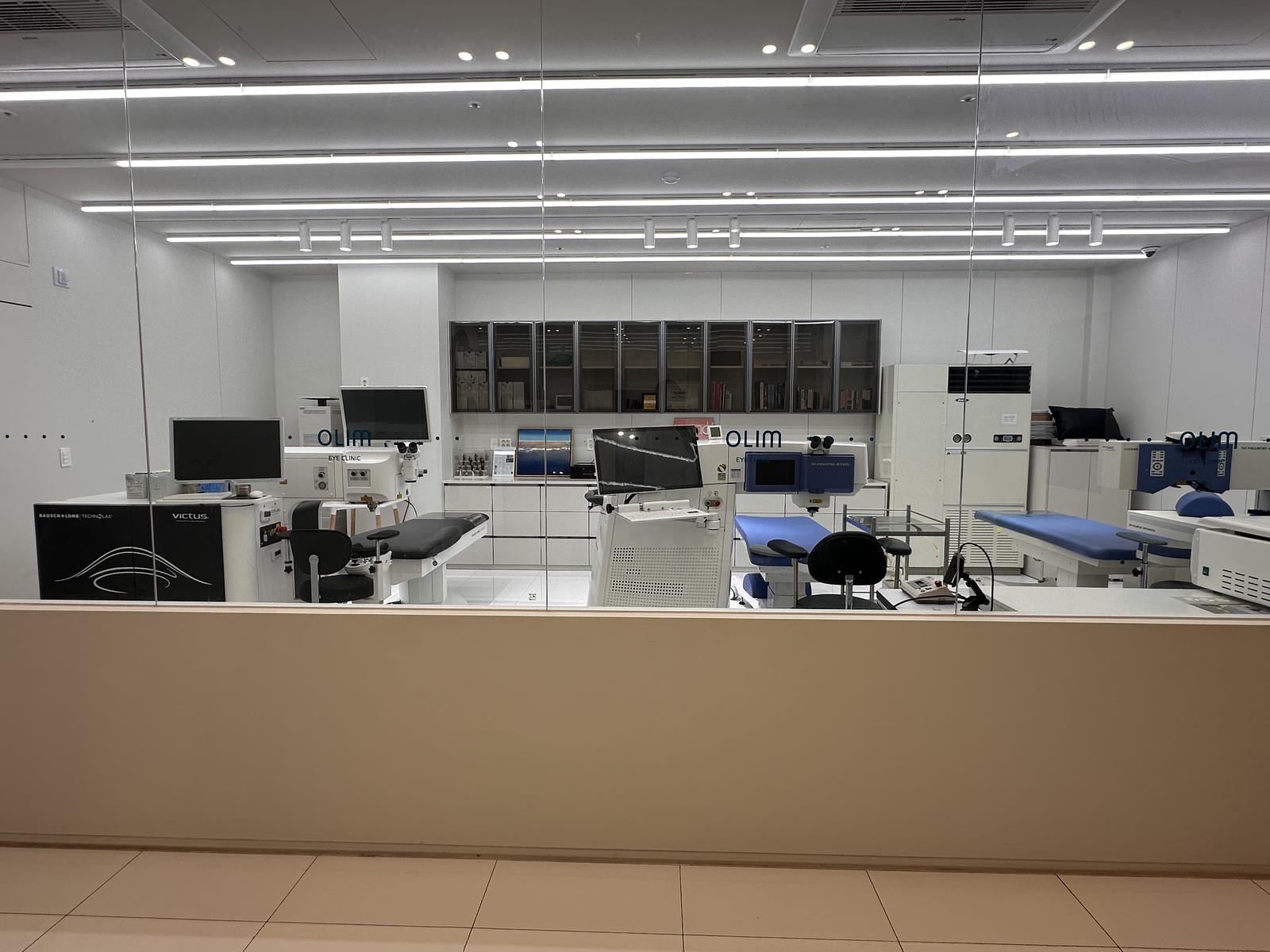
Before any vision correction at OLIM, your eyes go through an exam of about 60 tests, including Pentacam mapping of corneal thickness and shape. 5th-generation SMILE, LASIK, Contoura LASEK and ICL are all done here, and we recommend only the surgery your eyes need.
I'm writing this because people with high prescriptions often shop for a LASIK price first, when the question that settles everything is whether LASIK suits their cornea at all.
A LASIK quote means something only once your corneal thickness, prescription and corneal shape are known. With a high prescription, the method that fits may turn out to be LASEK, SMILE or ICL, and each is priced on its own terms.
If you have a recent prescription or a corneal thickness reading, send a photo of it on WhatsApp and ask one thing: which methods are worth discussing for these numbers. One photo is enough to start, and you can ask before booking anything.
Your numbers decide itSend a photo of your prescription or eye exam report. The doctor reviews it.
Why does a high prescription change what LASIK costs?
LASIK lifts a thin flap on the cornea, reshapes the tissue underneath with a laser, then lays the flap back. The higher your prescription, the deeper the laser removes, and the flap itself uses up part of the cornea's thickness. What I care about is how much tissue is left underneath when the work is done, because that layer holds the eye's shape for decades.
Think of planing a door that sticks. A minus 3 needs one light pass. A minus 9 with astigmatism needs a much deeper one, and a cornea on the thin side of normal may not have that depth to spare.
So for you, the cost question starts one step earlier. If your numbers rule LASIK out, the quote you need is for a different operation, and the exam that tells you this matters more than any headline figure.
When I don't recommend LASIK
There are eyes I won't put LASIK on, however far the person has traveled. The US Food and Drug Administration lists common reasons in its guide When is LASIK not for me?: a prescription that is still changing, thin corneas, conditions that slow healing, pregnancy or nursing, and contact sports where a blow to the eye is likely.
A cornea that steepens toward the bottom is another reason to slow down. It can be an early sign of keratoconus, and laser correction can make that condition worse. The Pentacam we use maps corneal topography, thickness and shape, which is how an abnormal cornea shows up before surgery rather than after.
Say you're minus 9 in both eyes with some astigmatism, your contacts dry out by mid-afternoon, and a surgeon at home said your corneas are too thin for LASIK. I wouldn't argue with that surgeon before seeing your map. If the exam agrees the cornea is thin for that correction, I'd set LASIK aside and ask two questions: does Contoura LASEK leave enough tissue, and would an ICL, which removes no cornea at all, be the better trade?
If you were told no at home, send the report or a photo of the corneal map from that exam, along with the reason you were given, and ask which methods your numbers leave open.
Your numbers decide itSend a photo of your prescription or eye exam report. The doctor reviews it.
Which methods could replace LASIK for my eyes?
Each option treats the cornea differently, and that difference is what you're really comparing.
| Method | What happens to the cornea | Often discussed for |
|---|---|---|
| LASIK | A flap, then laser reshaping underneath | Moderate prescriptions with ample corneal thickness |
| Contoura LASEK (Alcon Wavelight ex500) | No flap; the laser follows your own corneal shape and preserves as much tissue as possible | High myopia and astigmatism |
| 5th-generation SMILE (SCHWIND ATOS) | No flap; a 2mm incision | Myopia and astigmatism, with exam and surgery on the same day |
| ICL (ECHO ICL) | Nothing removed; a lens goes behind the iris | Very high myopia, astigmatism or hyperopia |
Contoura LASEK trades a slower first few days for more tissue left behind. Surface treatments like LASEK usually bring more discomfort and blurrier vision early on while the surface layer heals, as the American Academy of Ophthalmology's EyeWiki entry on LASEK describes.
An ICL sidesteps the corneal thickness problem, but it is surgery inside the eye, and the FDA lists risks such as raised eye pressure and cataract with these lenses. If your exam shows a laser is still possible, I've written separately about how your cornea decides between SMILE, LASIK and LASEK in Korea.
What decides the cost of LASIK in Korea
Once the method is settled, these are the things that move the figure for your case:
- The method. LASIK, Contoura LASEK, SMILE and ICL use different devices, and an ICL includes the lens itself.
- Your prescription and astigmatism. How much correction you need, and whether astigmatism is treated in the same session.
- The pre-op exam. At OLIM that's about 60 tests. Ask whether any quote you compare includes the exam.
- Days in Seoul. The number of checkups before you fly shapes your hotel nights as much as the clinic bill.
- Aftercare once home. Eye drops for the weeks after surgery and visits to an eye doctor where you live.
To get the figure for your own eyes, ask on WhatsApp what it would cost for your case, with a photo of your latest prescription, and ask which of these items it covers.
What do LASIK reviews from Korea get right and wrong?
Threads under 'LASIK cost Korea' and similar searches repeat a handful of claims. Some hold up better than others.
'Exam and surgery happen on the same day.' True for some methods. Here, 5th-generation SMILE is offered as one-day vision correction, with exam and surgery on the same day, when the exam shows your eyes suit it.
'LASEK hurts for a few days.' Largely true. The surface layer has to regrow, and the first days are usually the uncomfortable ones.
'You can fly home the next day.' Only partly. The FDA's patient guide puts the first follow-up visit within 24 to 48 hours of surgery (what to expect after LASIK), and you'll want that visit done before you board.
How long is recovery, and when can I fly home?
We put recovery at 1 to 2 days for LASIK and 2 to 4 days for LASEK. That's the time before daily tasks feel normal again; vision usually keeps settling for weeks afterward.
Your trip starts before you land. Stop wearing contact lenses 1 to 2 weeks before surgery so your cornea can return to its own shape, because measurements taken on a lens-pressed cornea can mislead.
Then count your days around our hours. We're closed Wednesdays and Sundays, and registration for exams and surgery closes two hours before closing: 5 p.m. on Monday, Tuesday and Thursday, 5:30 p.m. on Friday and 1 p.m. on Saturday. You can't drive after surgery, so come with a companion or use public transport. Ask at booking how many checkups your method needs before you fly, then leave one spare day. Hours and directions are on OLIM Eye Clinic's English homepage.
Risks and side effects to know
Most people have some dryness, glare or halos around lights at night in the first weeks, and vision that shifts between morning and evening while the cornea settles. After LASEK, expect light sensitivity and a gritty feeling for the first few days.
As general medicine, some people should wait or skip laser correction: anyone whose prescription changed in the past year, people with thin or irregular corneas, people who are pregnant or nursing, and those with severe dry eye or conditions that affect healing. Rarer problems include infection, flap complications after LASIK, and some nearsightedness creeping back over the years. How this plays out differs between people, and the in-person exam decides whether you're a candidate.
If something changes after you fly home, such as pain that gets worse, a sudden drop in vision or redness that spreads, see an eye doctor where you live that day and bring your surgery records. The CDC's medical tourism advice is to carry copies of your records and arrange follow-up care at home before you travel. We keep monitoring eyes with regular checkups after surgery; ask at booking how yours will work once you're home.
What to send first
Send your travel dates on WhatsApp with one question: which method do my numbers point to, and what would it cost for my case? A phone photo of your last eye exam is enough, and you can ask before booking a flight. When you come to Nonhyeon-ro, I'll go through your exam results with you in person and recommend the surgery that fits your eyes.
Frequently asked questions
Should I ask whether the eye exam is part of a LASIK quote in Seoul?
Yes. Ask every clinic what its figure covers: the pre-op exam, the surgery, eye drops and the checkups before you fly. At OLIM the exam before surgery runs about 60 tests, and you can ask on WhatsApp what the figure for your case includes.
How should I compare LASIK in Korea vs Singapore?
Compare the same items wherever you look: which methods are offered for a cornea like yours, how thorough the exam is, how many days the follow-up needs, and who checks your eyes once you're home. Those answers matter more than the city.
How long before the trip do I stop wearing contact lenses?
Stop wearing contact lenses 1 to 2 weeks before vision correction surgery, so your cornea can return to its own shape before it's measured. Message us on WhatsApp to confirm exactly how long for your lens type.
Can my eyes drift back toward nearsightedness after LASIK or LASEK?
Some regression over the years is possible, especially with higher corrections. A study in the Korean Journal of Ophthalmology looked at the factors linked to long-term regression after LASIK and LASEK for moderate myopia. It's one more reason the amount of cornea left after surgery matters.
Can I go back to the hotel on my own after surgery?
You won't be able to drive after surgery. Come with a companion or use public transport, and skip eye makeup on the day.
Sources
- When is LASIK not for me? · U.S. Food and Drug Administration
- What should I expect during and after surgery? (LASIK) · U.S. Food and Drug Administration
- LASEK · American Academy of Ophthalmology (EyeWiki)
- Phakic Intraocular Lenses: What are the risks? · U.S. Food and Drug Administration
- Medical Tourism · U.S. Centers for Disease Control and Prevention
- Factors Affecting Long-term Myopic Regression after LASIK and LASEK for Moderate Myopia (Lim SA et al. Korean J Ophthalmol 2016;30(2):92–100) · Korean Journal of Ophthalmology (via PubMed Central)
Written with AI assistance from OLIM Eye Clinic Gangnam's published information and the medical sources listed below. This article is general medical information and does not replace a diagnosis. Whether and how to operate is decided after an in-person exam.