
 한국어
 English
 繁體中文
 Монгол хэл
Korea EVO ICL Reviews and Complaints: Which Ones Should Worry You? Cost, Methods and Recovery
Most complaints in ICL reviews are about night halos, eye pressure and lens sizing. All three are known risks, and how a clinic measures your eye before surgery is the part you can check.
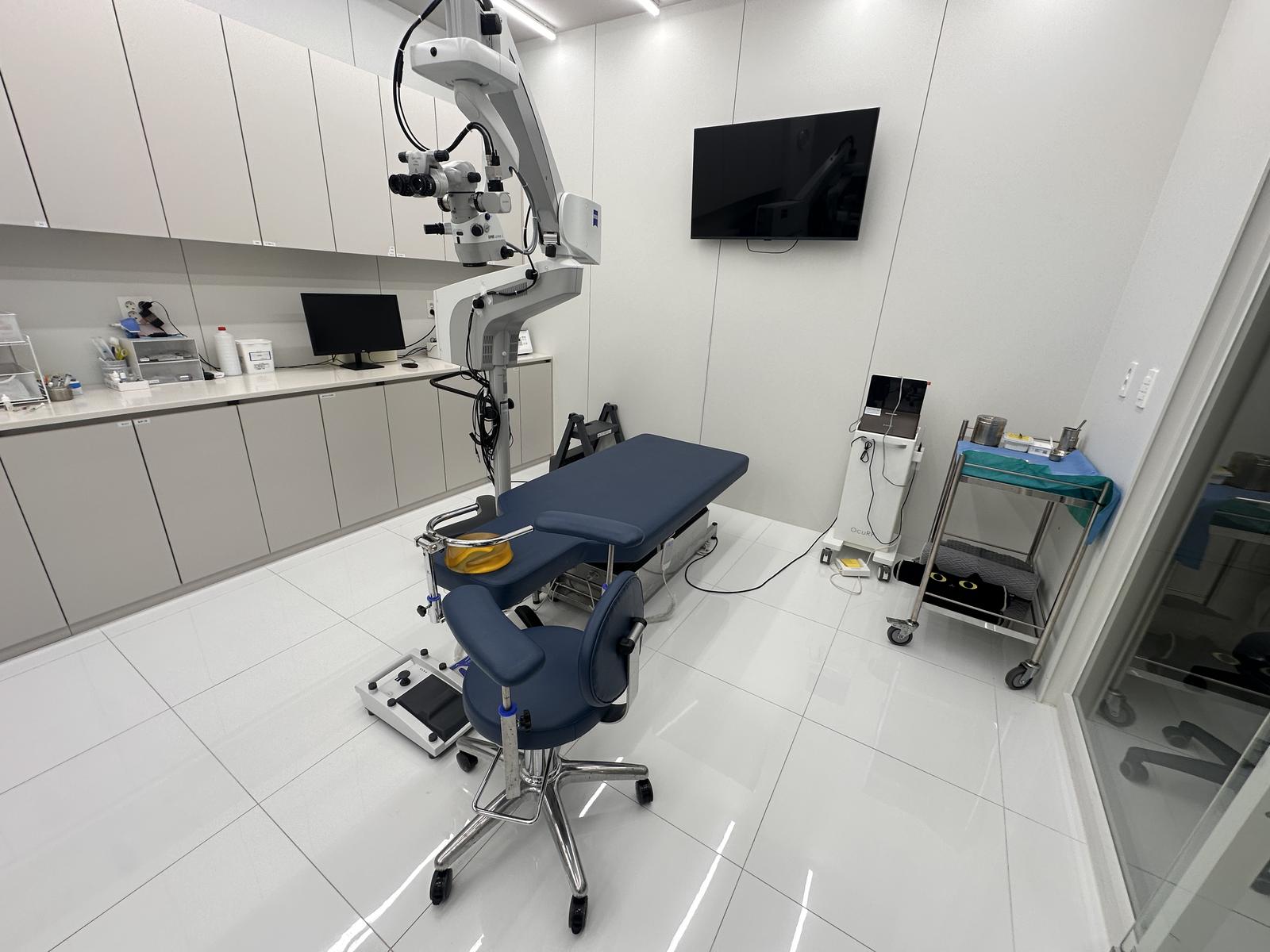
Reading Korea EVO ICL reviews and complaints late at night and wondering which of those bad experiences could actually happen to your eyes?
Read this before you book a consultation anywhere in Seoul.
By the end you'll know which common complaints are medically real, how the lens and laser methods differ, what decides the cost and what recovery looks like. That's enough to judge a clinic on your own prescription and your own budget.
Hello, I'm Dr. Lee Ki-il, Medical Director and ophthalmologist at OLIM Eye Clinic in Gangnam.
Our comprehensive eye exam runs about 60 detailed tests, and I review your results and explain them to you in person. The implantable lens on our menu is ECHO ICL, which corrects very high myopia, astigmatism and even hyperopia. I recommend only the surgery your eyes need.
I wrote this because people tend to compare clinics on the lens brand, while most complaints in review threads trace back to measurement and follow-up.
The complaints worth taking seriously are halos at night, a rise in eye pressure, and a lens that sits too close to or too far from your natural lens. All three are known risks of phakic lenses, and the way a clinic measures your eye before surgery is the part you can check yourself.
If one of those complaints is the reason you keep putting this off, send a photo of your current glasses or contact lens prescription on WhatsApp and name that one complaint in your first message.
Your numbers decide itSend a photo of your prescription or eye exam report. The doctor reviews it.
What do the complaints in ICL reviews describe?
Read through Korea EVO ICL reviews and complaints for an evening and the same five themes keep coming back. Here is how each one holds up medically.
| What reviews say | Medically | What to ask |
|---|---|---|
| Halos and starbursts around lights at night | Real. Listed by the FDA among phakic lens risks; for many people they fade over months, for some they stay | Was my pupil size in dim light measured? |
| Eye pressure spiked after surgery | Real. Usually treatable when caught early | Who checks my pressure in the first day, and who do I call on a closed day? |
| It's reversible, so there's no risk | Partly true. The lens can come out, but that is a second operation inside the eye | What would removal or exchange involve? |
| The lens was the wrong size | Real. Size is chosen from measurements of the space inside the eye | Which measurements set my lens size? |
The FDA's page on phakic lens risks also lists loss of corneal endothelial cells and retinal detachment. Reviews rarely mention these because they develop slowly or rarely, which is exactly why long-term checks matter more than how the first week felt.
One more complaint shows up often: I couldn't understand what the doctor told me. That's a process problem, and you can test it before you fly by asking your questions in writing and seeing how clearly they're answered.
EVO and ECHO: check the lens name on your quote
EVO is the name of STAAR Surgical's implantable collamer lens. The US FDA approved the EVO Visian ICL for myopia in 2022, as Optometry Times reported. EVO-type lenses have a small central opening meant to let fluid pass through the lens, which is why many surgeons no longer make a small laser hole in the iris beforehand.
I'm saying that plainly because a review about one lens model doesn't automatically describe another, and because you should know exactly what goes into your eye. Whichever clinic you consult, ask for the manufacturer and model name on your quote.
Which method fits a high prescription?
Laser vision correction reshapes the cornea by removing tissue. An ICL leaves the cornea as it is and adds a thin lens behind the iris, in front of your own lens. With a strong prescription and a thin cornea, removing enough tissue can leave too little behind, and that's where a lens comes into the conversation.
An ICL has its own requirements. Your eye needs enough room between the cornea and your natural lens, and a healthy count of endothelial cells on the inner surface of the cornea. If either falls short, the lens isn't the safer choice anymore.
Our menu covers 5th-generation SMILE with the SCHWIND ATOS through a 2mm incision, LASIK and LASEK, and ECHO ICL. Even with the same myopia, the right surgery differs with corneal thickness and shape, so we go over your test results and choose together. If your cornea turns out thick and regular enough for laser, I compared those options in how SMILE, LASIK and LASEK differ for your cornea. Laser methods carry their own trade-off: dry eye in the first months is common, and too little remaining cornea can weaken it over time.
Questions to ask any Korean clinic before ICL
You can't judge a surgeon's hands from a review. You can judge the process, and these five questions show you most of it.
First: which lens, which model, and why that size? A clinic should be able to tell you which measurements decided the size.
Second: who looks at my results, and who explains them? At OLIM, I review your test results and explain them to you in person.
Third: what happens if my pressure rises the night after surgery? We're closed on Wednesdays and Sundays, so this question applies to us as much as anyone. Ask who you contact and where you go.
Fourth: how many check-ups happen in Korea, and what can my eye doctor at home do afterward? Ask for your lens model and size on paper so a doctor at home knows what's in your eye.
Fifth: does my astigmatism need a toric lens, and how is its rotation checked after surgery?
Say you're 28, teaching English in Busan, around -9.50 with 2.00 of astigmatism, and your contacts feel gritty by mid-afternoon. You can only come to Seoul on weekends. I'd look at your corneal thickness and shape first, then at the room inside your eye. If the chamber is shallow, an ICL is off the table and I'd tell you that. If both look fine, we'd talk about a toric lens for the astigmatism. If your cornea is thicker and more regular than your prescription suggests, a laser option might come into the discussion too.
If you have a recent exam report from home that shows corneal thickness or a corneal map, send a photo of it on WhatsApp together with the weekends you could come to Seoul.
Your numbers decide itSend a photo of your prescription or eye exam report. The doctor reviews it.
What decides the cost of ICL in Korea?
No single figure fits every eye, because the price moves with a handful of things:
The lens type is the first. A toric lens for astigmatism is a different product from a spherical one. Then whether you're treating one eye or both, and the pre-op measurement exam itself. Your own costs include the days you stay in Seoul for the surgery and the early check-ups. When you compare quotes, ask what's included: the exam, the lens, the surgery, eye drops and follow-up visits.
To get the figure for your case, ask on WhatsApp what it would cost for your eyes, with a photo of your prescription. You can also use the cost inquiry form on OLIM Eye Clinic's English homepage.
How long is recovery after ICL?
For many people, vision is noticeably clearer within the first day, with some blur, light sensitivity and a scratchy feeling. Eye pressure is usually checked early because that's when a spike is most likely. Drops continue for a few weeks, and you'll be asked not to rub your eyes or swim for a while. Halos, if you have them, often settle over the following months.
If you're coming on a Saturday, our hours are 09:00 to 15:00, and registration for exams and surgery closes two hours before closing, so plan on arriving in the morning. The clinic is on floors 2 to 5 of the Rian Building, about 200m from Exit 6 of Eonju Station.
Before you fly home, ask your surgeon when flying is fine for your eye. The CDC's medical tourism guidance also suggests arranging follow-up care at home before you travel.
Risks and side effects to know
Common and temporary: blurred vision, light sensitivity, a gritty feeling and halos in the first days to weeks. Less common: a rise in eye pressure, inflammation inside the eye, or a lens that needs to be repositioned or exchanged. Rare but serious: infection, retinal detachment, cataract, and loss of endothelial cells over the years.
As general medicine, you should usually wait or skip ICL if your prescription has changed over the past year, if the space inside your eye is shallow, if your endothelial cell count is low, if you have glaucoma or a history of inflammation inside the eye, or if you're pregnant or breastfeeding, since the prescription can shift then.
If you're back home and you notice sudden eye pain, a headache with nausea, a red eye that's getting worse, a drop in vision, or new flashes, floaters or a shadow across your vision, see an ophthalmologist that day. Bring the paper with your lens model and size. Recovery and results differ from one person to the next, which is why the long-term checks matter.
What should you send first?
Send one photo of your latest prescription or exam report on WhatsApp, along with the one complaint from those reviews that worries you most. One photo is enough, and you can ask before booking anything. When you come to Seoul, I'll examine your eyes, go through the results with you in person, and recommend the option that fits, even if that turns out to be no surgery at all.
Frequently asked questions
Is an ICL reversible if something goes wrong?
The lens can be removed or exchanged, which is one reason people choose it. Removal is still an operation inside the eye with its own risks, so treat reversibility as a safety option, not a reason to skip careful measurement.
Can an ICL correct astigmatism as well as myopia?
Yes, a toric version of the lens corrects astigmatism. The ECHO ICL on our menu corrects very high myopia, astigmatism and even hyperopia. A toric lens has to sit at the right angle, so ask how its rotation is checked after surgery.
Will I still need reading glasses later with an ICL?
An ICL corrects distance vision. Presbyopia, the gradual loss of near focus, usually starts in the 40s regardless of surgery, so reading glasses may still become part of life later.
Should I stop wearing contact lenses before the ICL exam?
Contacts can change the shape of the cornea for a while, which can affect measurements. Ask the clinic how many days before the exam to switch to glasses, and plan your trip around that.
Does ICL surgery hurt?
Numbing drops are used, so most people describe pressure rather than pain during the operation. Afterward, a scratchy feeling and light sensitivity for a day or two are common; strong pain is a reason to call a doctor.
Sources
- Phakic Intraocular Lenses: What are the risks? · U.S. Food and Drug Administration
- FDA approves STAAR Surgical's EVO Visian ICL for myopia (2022) · Optometry Times
- Phakic Intraocular Lens Implantation for the Correction of Myopia (Ophthalmic Technology Assessment, 2009) · American Academy of Ophthalmology
- Medical Tourism · U.S. Centers for Disease Control and Prevention
Written with AI assistance from OLIM Eye Clinic Gangnam's published information and the medical sources listed below. This article is general medical information and does not replace a diagnosis. Whether and how to operate is decided after an in-person exam.