 한국어
 English
 繁體中文
 Монгол хэл
Laser Eye Surgery Korea in Your 40s, With Dry Eyes: How Should You Plan the Trip? Cost, Results and Reviews
In your 40s, a Seoul trip for laser vision correction should be planned around two things: dry eye testing before the method is chosen, and the first check-up after surgery before you fly home.
Laser eye surgery Korea: does it still make sense at 45, when your contacts feel dry by mid-afternoon and you have two weeks of leave to fit it into?
Before you lock in flights, read this through once.
By the end you'll know what dry eye has to do with the method you choose, how many days to plan around the exam and the first checks, what results to expect in your 40s, what reviews get right, and what decides the cost. That's enough to pick a trip length and a method that suit your eyes and your budget.
Hello, I'm Dr. Lee Ki-il, Medical Director and ophthalmologist at OLIM Eye Clinic in Gangnam. I'm an adjunct professor at Seoul St. Mary's Hospital, The Catholic University of Korea College of Medicine, and a full member of ASCRS and KSCRS.
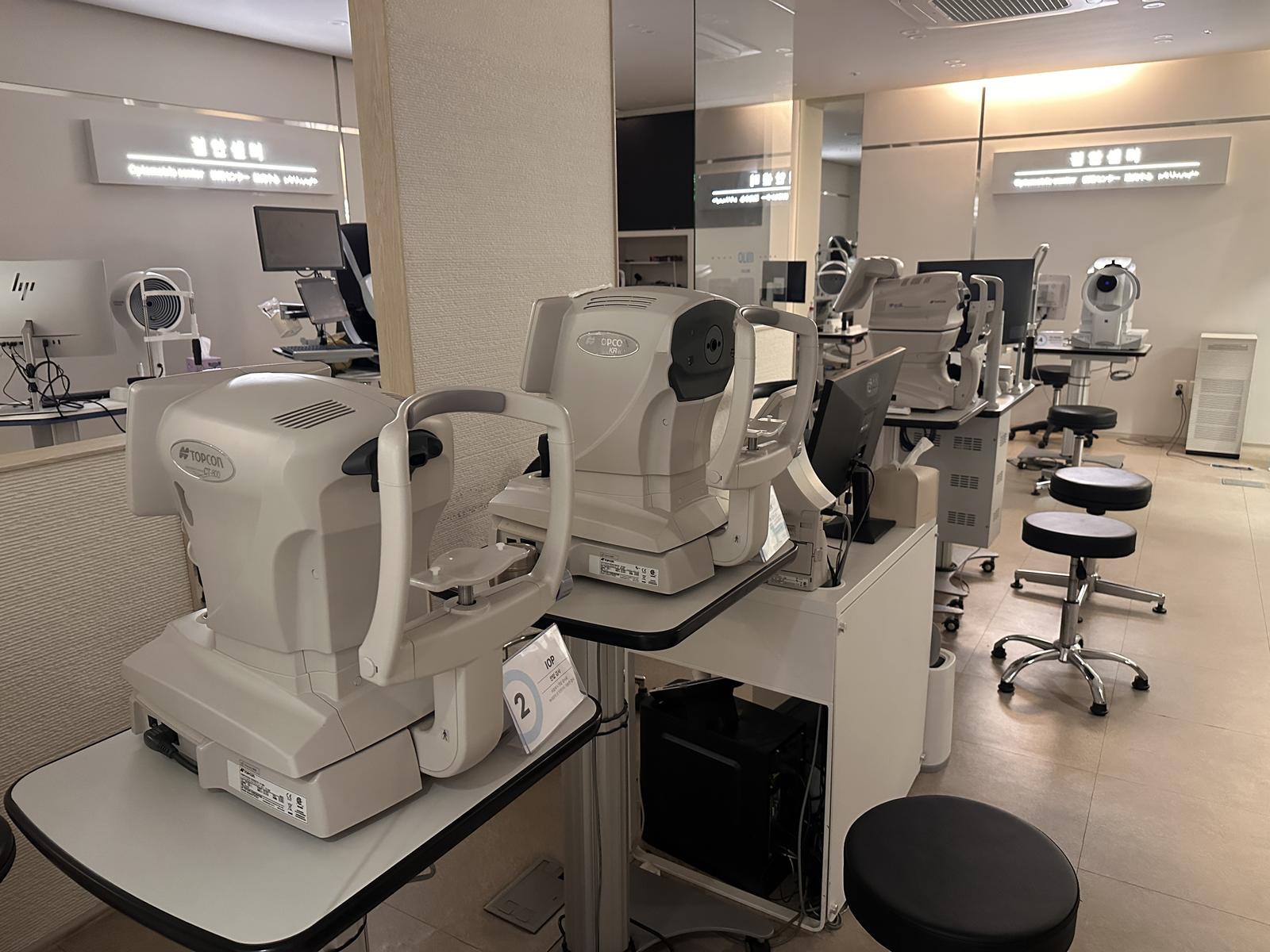
At OLIM, the comprehensive eye exam runs about 60 tests, including dry eye testing on the OCULUS Keratograph 5M. For 5th-generation SMILE on the SCHWIND ATOS, the exam and the surgery can be done on the same day. I review your test results and explain them to you in person.
I wrote this because people in their 40s tend to plan the trip around the surgery date and leave out the two things that shape the months after it: the tear film and the follow-up.
In your 40s, though, the method should be chosen with your dry eye results in hand, and correcting distance vision won't stop the reading-glasses stage that comes with age.
If you already know your numbers, send a photo of your latest glasses or contact lens prescription on WhatsApp with the dates you're free, and ask the one question on your mind: do my dry eyes change which method I should look at?
Your numbers decide itSend a photo of your prescription or eye exam report. The doctor reviews it.
What is dry eye, and why does it matter before laser?
Your tear film is thin but layered. A watery layer keeps the cornea wet, and an oil layer from the meibomian glands along your lid margins stops that water from evaporating. Dry eye is what happens when the film breaks up too fast or there isn't enough of it: burning, grit, and vision that blurs at the screen and clears when you blink.
It becomes more common in your 40s, and years of contact lens wear add to it. Many people who come for laser correction already have some dryness and have simply blamed the lenses.
Laser vision correction works on corneal tissue that carries the nerves telling your eyes to make tears. For weeks to months afterwards, many people's eyes feel drier than before. The FDA's patient guidance says LASIK tends to aggravate dry eye and lists dry eyes among the risk factors a doctor should screen for.
The Keratograph 5M images the meibomian glands and measures tear meniscus height, tear break-up time, the lipid layer and redness. Those readings show whether your dryness comes from blocked oil glands or from too little tear fluid, and the two are treated differently.
Which method fits eyes that already run dry?
In short, this is where the trip plan and the medical plan meet. I have three laser routes to think through with you, plus one that isn't laser at all.
5th-generation SMILE. On the SCHWIND ATOS, the correction is made through a 2mm incision without a corneal flap. Dry eye can still follow SMILE, so a smaller incision is a reason to consider it, never a reason to skip the dry eye tests.
With Contoura LASEK on the same laser, the ablation follows the shape of your own cornea and works on the surface, keeping as much residual cornea as possible. The American Academy of Ophthalmology's EyeWiki notes that surface procedures like LASEK usually bring more discomfort and slower visual recovery in the first days than LASIK, which matters if your flight is close.
ICL. If your cornea is too thin or irregular for laser, a lens placed inside the eye becomes part of the conversation. It has its own risks; the FDA lists raised eye pressure and cataract among them.
If the glands turn out to be blocked, OLIM has LipiFlow, which applies heat and pressure to the eyelids to melt hardened secretions, and IPL AQUA CEL, which helps release hardened oil at the gland openings. I went through how corneal thickness decides between the laser options in more detail in SMILE, LASIK or LASEK in Korea: how your cornea decides.
Say you're 46, around -4.00 in both eyes, with contacts out by 3 pm most days. Your tear break-up time comes back short and the gland images show partial blockage, while your corneal thickness on the Pentacam is comfortably within range. In that situation I would talk with you about treating the glands first, then look at the surface again before we choose between SMILE and the other routes. If your cornea is thinner than it should be for the correction, the answer may be ICL, or no surgery on this trip.
How many days should the Korea trip be?
Picture the trip from the end backwards. The FDA's guidance for LASIK patients is to be seen within 24 to 48 hours after surgery and at regular intervals for at least the first six months. Your return flight should come after that first check, not before it.
The weeks before you leave count too. Contact lenses come out 1–2 weeks before vision correction surgery so your cornea can return to its natural shape. That means wearing glasses at home, on the plane and on your first days in Seoul.
When you choose the exam day, skip Wednesdays and Sundays; the clinic is closed both days. Registration for exams and surgery closes 2 hours before closing, so on Monday, Tuesday and Thursday you need to arrive before 17:00, on Friday before 17:30, and on Saturday before 13:00.
On surgery day, skip eye makeup and wear comfortable clothes. You won't be able to drive afterwards, so come with someone or take the subway; the clinic is about 200m from Exit 6 of Eonju Station. Hours, the address and the WhatsApp number are on OLIM Eye Clinic's English homepage, and the directions and before-you-come notes list both subway routes.
| When | What to plan | Why |
|---|---|---|
| 1–2 weeks before you fly | Contacts out, glasses only | Cornea returns to its natural shape |
| Exam day | Not Wednesday or Sunday; arrive before registration closes | Clinic hours |
| Surgery day | No eye makeup, no driving | Clinic guidance |
| 24–48 hours after | First check-up, before any flight | FDA LASIK guidance |
| First 1–2 months | No pools, hot tubs or saunas | FDA LASIK guidance |
That last row catches travelers out. Hotel spas and Korean saunas count as hot tubs, so leave them for a later trip. The FDA also advises waiting one to three days before non-contact sports and at least four weeks before contact sports.
On the flight home, cabin air is dry. Bring the lubricating drops you were prescribed and use them as directed. Before you leave home, book an appointment with an ophthalmologist for the weeks after you return, so the regular checks have somewhere to happen. After surgery we keep monitoring your eyes with regular checkups, so ask at booking how that works for someone who lives abroad.
Once your dates are firm, send your arrival and departure dates on WhatsApp, say whether a Wednesday or Sunday falls in the middle, and ask how many days to keep free after surgery for the method you're leaning toward.
Your numbers decide itSend a photo of your prescription or eye exam report. The doctor reviews it.
What results can you expect in your mid-40s?
Laser correction treats the distance prescription: the nearsightedness and astigmatism you wear glasses or contacts for now. Most people want to stop reaching for glasses on waking, for driving and for the gym, and that is the part laser addresses. No surgeon can promise an exact result, and some people still need glasses for certain tasks.
Near vision is a separate process. The American Academy of Ophthalmology describes presbyopia as the normal age-related loss of focusing up close, usually noticed after about 40. Laser for distance doesn't stop it, so at 45 you should expect reading glasses to arrive or stay.
If near vision already bothers you more than distance, laser for distance may be the wrong first step. Presbyopia correction is a different conversation, and I generally prefer to have it before cataract joins in during the 60s.
Dry eye also shapes early results. In the first weeks, vision can fluctuate through the day as the tear film steadies, which is why I measure it before surgery and not only after.
What reviews get right and wrong
A few claims turn up again and again in forum threads and review sites about laser surgery in Seoul.
'I was back at work the next day.' For SMILE and LASIK, many people with desk jobs do return quickly, though screens feel drier at first. For LASEK, the first days are usually slower and more uncomfortable, so the claim doesn't carry over.
'My eyes were dry for months.' Dryness after laser is common and for many people eases over weeks to months. It tends to last longer in people who were already dry before surgery, which is the case for testing first.
'They did everything in one day.' For SMILE at OLIM, the exam and the surgery can happen on the same day. The check-ups afterwards still take days, so a one-day surgery is not a one-day trip.
'I saw halos at night.' Glare and halos around lights are common early on and usually settle. If you drive at night for work, mention it at the exam.
Laser eye surgery Korea: what decides the cost
There's no single figure that fits everyone, because the cost moves with a few things:
- The method. SMILE, LASIK and Contoura LASEK use different devices and steps, and ICL is a separate procedure.
- Dry eye care. Whether your glands need LipiFlow or IPL before or after surgery, and how many sessions.
- The exam. The comprehensive eye exam is the starting point whatever you decide.
- Days in Seoul. Lodging and leave are your costs, and a dry-eye-first plan can add days or a second trip.
- Follow-up at home. Visits with your ophthalmologist after you return.
To get the figure for your own case, ask on WhatsApp what it would cost for the method you're considering and which of these items it includes.
Risks and side effects to know
In the first days and weeks, the common reactions are dryness, a gritty feeling, light sensitivity, glare or halos at night, and vision that fluctuates. For many people these ease over weeks to a few months, and they tend to last longer when dry eye was present before surgery. Results and recovery vary between people.
Some people should wait or consider another option, as a general rule:
- a prescription that changed in the past year
- pregnancy or breastfeeding, which the FDA links to unstable prescriptions
- significant dry eye that hasn't been treated
- a thin or irregular cornea, including early keratoconus, which the Pentacam is used to detect before surgery
- conditions that affect healing, such as some autoimmune diseases
Whether you're suitable is confirmed at the in-person exam, not before it.
If something feels wrong after you fly home, such as pain that gets worse, a sudden drop in vision, or redness that increases, see an ophthalmologist where you are the same day and bring your surgery records. Then message the clinic on WhatsApp with what happened. Gradual dryness is different: keep using your drops and raise it at your scheduled check.
Your first message can be short. Send a list of the eye drops you use now and the time of day your eyes feel driest on WhatsApp, and ask whether dry eye treatment should come before surgery on your trip. You can ask before booking anything. When you come, I examine your eyes, explain the results to you in person, and we choose together what fits, including no surgery if that's what your eyes need.
Frequently asked questions
Can I fly home the day after laser surgery?
Plan your flight after your first post-op check. FDA guidance for LASIK is to see your doctor within 24 to 48 hours after surgery. Ask on WhatsApp how many days to keep free for the method you're considering.
How long before the exam do I stop wearing contacts?
Stop wearing contact lenses 1–2 weeks before vision correction surgery so your cornea can return to its natural shape. Wear glasses on the flight and until the exam.
Is OLIM Eye Clinic open on weekends?
Saturdays 09:00–15:00, with registration for exams and surgery closing at 13:00. The clinic is closed on Sundays and Wednesdays. Weekday lunch is 13:00–14:00.
Can dry eye treatment be done on the same trip?
The clinic has LipiFlow and IPL AQUA CEL for meibomian gland problems. Whether you need them, and whether that moves your surgery date, comes from your dry eye test results.
Will I still need reading glasses after laser correction?
Most likely, if you're in your mid-40s. Laser corrects your distance prescription, but presbyopia, the age-related loss of near focus, carries on.
How do I get to the clinic?
OLIM Eye Clinic is on floors 2–5 of the Rian Building, 546 Nonhyeon-ro, Gangnam-gu, about 200m from Exit 6 of Eonju Station. Valet parking is available, but don't plan to drive after surgery.
Sources
- When is LASIK not for me? · U.S. Food and Drug Administration
- What should I expect during and after surgery? (LASIK) · U.S. Food and Drug Administration
- What Is Presbyopia? · American Academy of Ophthalmology
- LASEK · American Academy of Ophthalmology (EyeWiki)
- Phakic Intraocular Lenses: What are the risks? · U.S. Food and Drug Administration
Written with AI assistance from OLIM Eye Clinic Gangnam's published information and the medical sources listed below. This article is general medical information and does not replace a diagnosis. Whether and how to operate is decided after an in-person exam.