
 한국어
 English
 繁體中文
 Монгол хэл
Need a Korea EVO ICL Recovery Plan That Fits Your Life? Cost, Reviews and Methods
A Korea EVO ICL recovery plan is a dated schedule of your checks, drops and activity limits. The lens sits behind the iris and leaves corneal tissue in place, so the plan mainly guards the incision, eye pressure and lens position.
Putting together a Korea EVO ICL recovery plan and worried it won't fit your job, your workouts or the flight home?
Read this before you ask for leave or book a seat.
You'll know what decides the cost, which review claims hold up medically, how EVO compares with other methods, and how to map recovery onto your own week. That should tell you whether this lens and this trip suit your eyes and your budget.
Hello, I'm Dr. Lee Ki-il, Medical Director and ophthalmologist at OLIM Eye Clinic in Gangnam.
Exams, surgery, recovery and care all happen on floors 2–5 of one building on Nonhyeon-ro. I review your test results and explain them in person, and regular checkups continue after surgery.
I'm writing this because many people plan around a single number of days, when screens, sweat, water and flying each run on a different clock.
A recovery plan for this lens is a dated schedule of your checks, drops and activity limits. The lens sits behind the iris and leaves corneal tissue in place, so the plan mainly guards the small incision, your eye pressure and the lens position.
If you want a starting point, send a photo of your latest prescription on WhatsApp and ask which lens would be discussed for your numbers.
Your numbers decide itSend a photo of your prescription or eye exam report. The doctor reviews it.
What is EVO ICL, and how does it work?
EVO ICL is an implantable collamer lens made by STAAR Surgical, and the FDA approved it for myopia in 2022. The surgeon folds it, passes it through a small incision and positions it behind the iris, in front of your natural lens. Your natural lens stays. A small central port lets eye fluid circulate, which is why this design generally doesn't need a separate laser opening in the iris.
The lens named on my clinic's site is ECHO ICL, which we use to correct very high myopia, astigmatism and even hyperopia. If you've been searching for EVO by name, ask directly which lens would go in your eye and why. A lens name in a forum thread and a lens name on a consent form should match before you travel.
Who does this kind of lens suit, and who should skip it?
In general, phakic lenses are considered for adults with a stable prescription whose myopia is high, or whose corneas look thin or irregular for laser. Contact lens intolerance often brings people to the conversation, though it's a weak reason alone.
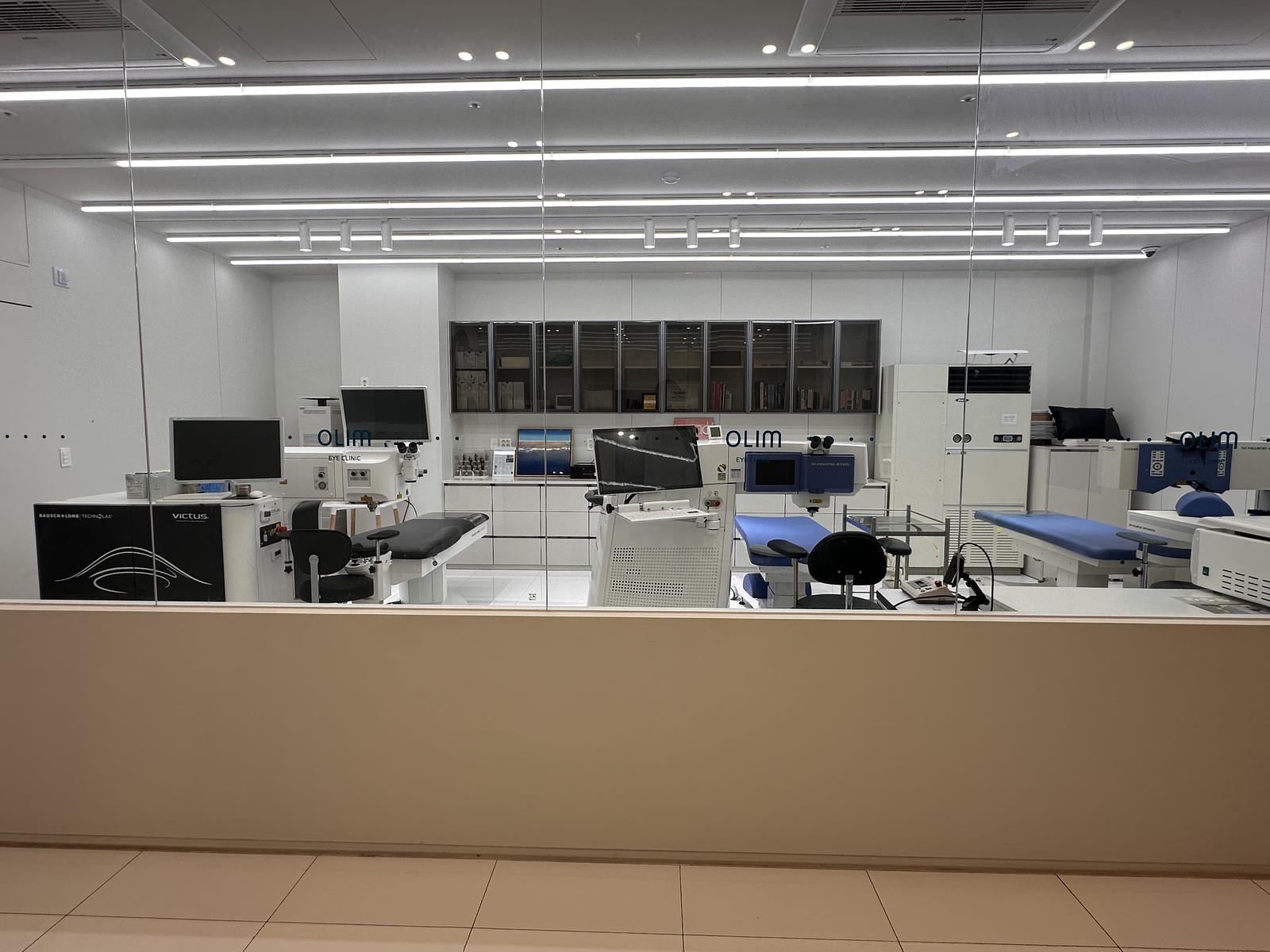
The eye has to have room for it. A shallow space in the front of the eye, a low count of cells on the inner cornea, unstable prescription, uncontrolled glaucoma, active inflammation or pregnancy are common reasons to hold off. My clinic's Pentacam analyzes corneal shape and thickness, and the TOPCON SP-1P photographs those inner corneal cells. These numbers belong in your plan as much as the prescription does.
How does recovery fit your job, gym and flight?
The question I'd put to you first is what your ordinary day 3 looks like. Someone who sits at a screen and someone who lifts crates need different plans for the same lens. The table shows general patterns after this type of surgery. Your surgeon's written instructions come first.
| Part of your life | General pattern | What to ask |
|---|---|---|
| Screens and desk work | Many people return within days; eyes may tire and vision may fluctuate | How soon for your daily screen hours? |
| Driving | Not after surgery; halos at night can stand out early on | When will you be cleared to drive at night? |
| Gym and running | Light activity usually comes first; sweat and knocks to the eye are the concern | Which date for your specific sport? |
| Pools, hot tubs, saunas | Usually avoided for longer because of infection risk | What is the date for water? |
| Eye makeup | Usually kept away during early healing | When can it restart? |
| Flying | Cabin pressure is not usually the limit; missing an early check is | Which checks must happen before departure? |
The days before surgery belong in the plan too. Our pre-visit notes on the directions page ask you to stop contact lenses 1–2 weeks before vision correction, skip eye makeup on the day and wear comfortable clothes. You won't be able to drive afterward, so come with a companion or use public transport.
Say you have ten days and a desk job
Say you're 34, about minus 9 with astigmatism, you run three times a week, and you have ten days off. I'd start with three things: whether your eyes qualify, whether the lens has to be ordered for your measurements, and where your early checks fall.
The lens order can change the whole trip. My site describes same-day exam and surgery for SMILE, so don't assume the same for ICL.
Then look at the calendar. We're closed Wednesdays and Sundays, and registration for exams and surgery closes 2 hours before closing, which means 13:00 on a Saturday. Surgery the day before a closed day raises one question: when would your next-day check happen? Our English homepage lists the full hours.
For you, I'd treat running as a date to ask about, and I'd put a local eye doctor's appointment on your calendar for after you land. The CDC's medical tourism guidance also tells travelers to think about follow-up care at home before leaving. Ask for a copy of your surgical records, including the lens details, so that doctor can see what's in your eye.
That's your Korea EVO ICL recovery plan in practice: one page of dates, and a named person at home. To start yours, send your work pattern, your main sport and your intended flight date on WhatsApp, and ask where the checks would fall.
Your numbers decide itSend a photo of your prescription or eye exam report. The doctor reviews it.
What do reviews get right about ICL recovery?
Three claims come up again and again in public review threads and forums, and they deserve different answers.
"I could see well the next morning." That's plausible for many people, since no corneal healing has to happen across the visual axis. It doesn't cover the whole plan, because pressure and lens position still need checking in the early period.
"The halos never went away." Halos and glare at night are a real side effect of phakic lenses. They often become less noticeable over time, though not for everyone. Night drivers should raise this before surgery.
"It's completely reversible, so there's nothing to worry about." The first half is partly true: the lens can usually be taken out. The second half isn't, because removal is another operation with its own risks.
Which methods should you compare with EVO?
The main alternative is laser, which reshapes the cornea. We offer 5th-generation SMILE with a 2mm incision, plus LASIK and LASEK, with recovery listed at 1–2 days for LASIK and 2–4 days for LASEK. Those figures belong to those procedures and don't carry over to ICL.
The trade-off is tissue against an intraocular operation. Laser removes corneal tissue, which can be a problem in a thin or irregular cornea, and dry eye is a common early effect. ICL leaves that tissue alone, but the surgeon has to enter the eye. My post on how SMILE, LASIK and LASEK differ by cornea covers the laser side, and we choose together based on your results.
What decides the cost of your plan?
A few things move the figure for an implantable lens trip:
- Which lens you and your surgeon settle on, and whether it needs astigmatism correction
- One eye or both, and how the two surgery dates are arranged
- The exams needed before surgery
- The drops and follow-up visits after surgery, so ask what's included
- Your days in Seoul, which the lens order and check dates can stretch
For your own number, ask on WhatsApp what it would cost for your case, with a photo of your prescription attached.
Risks and side effects to know
Common early effects include blur, light sensitivity, redness, mild irritation and halos at night. These usually settle over days to weeks, though recovery varies between people.
The FDA's list of phakic lens risks includes glare and halos, raised eye pressure, cataract, loss of inner corneal cells, retinal detachment, infection and the need for more surgery. The steroid drops often used after eye surgery can also raise pressure in some people, one reason checks matter even when you feel fine.
People who should generally hold off or skip this include those with a changing prescription, a narrow front chamber, low inner corneal cell counts, uncontrolled glaucoma, eye infection or inflammation, and those who are pregnant or breastfeeding.
If you're already home and notice worsening pain, a red eye with falling vision, sudden blur, flashes, new floaters or a shadow across your sight, see an ophthalmologist or emergency department that day. Bring your surgical records with you, then let us know what happened.
What to send first
One photo is enough to begin, and you can ask before booking anything. Send your most recent eye report on WhatsApp with one question, such as "which restrictions would matter most for my job?"
When you come to Seoul, you'll have the detailed exam, I'll explain your results in person, and we'll choose the option that fits your eyes and your plans together.
Frequently asked questions
Will I be able to feel the lens in my eye?
Most people don't feel an implantable lens once the early irritation settles, because it sits inside the eye behind the iris. Tell your surgeon about any lasting discomfort, since it should be checked.
Can both eyes be done on the same trip?
Ask how the two surgery dates would be spaced before you set your return flight, because this changes your days in Seoul.
How long before surgery do I stop wearing contact lenses?
Our pre-visit guidance for vision correction is 1–2 weeks beforehand, so the cornea has time to return to its natural state. Count this into your plan, especially if you rely on contacts at work.
Does astigmatism change the recovery plan?
It can. A lens that corrects astigmatism has to stay at a set rotation, so its position is one more thing to confirm at early checks. Rubbing the eye is a particular concern in those first days.
Can I sightsee in Seoul between checks?
Gentle walking is usually fine once your surgeon agrees. Plan for bright light sensitivity, wear sunglasses, avoid dusty or crowded places where the eye could be knocked, and leave saunas and pools off the list.
Does the lens stop me from having cataract surgery later?
Generally no. If a cataract develops later, the implanted lens can usually be removed during cataract surgery. Keep your lens records so a future surgeon can plan around them.
Sources
- Phakic Intraocular Lenses: What are the risks? · U.S. Food and Drug Administration
- Medical Tourism · U.S. Centers for Disease Control and Prevention
- FDA approves STAAR Surgical's EVO Visian ICL for myopia (2022) · Optometry Times
Written with AI assistance from OLIM Eye Clinic Gangnam's published information and the medical sources listed below. This article is general medical information and does not replace a diagnosis. Whether and how to operate is decided after an in-person exam.