
 한국어
 English
 繁體中文
 Монгол хэл
Korea EVO ICL Procedure Steps and Procedure: Is the Lens Worth Its Trade-Offs? Cost, Reviews and Recovery
An ICL is a thin lens placed behind the iris through a small incision. It suits adults with high myopia and enough room inside the eye, and it does nothing for the reading blur that starts in your 40s.
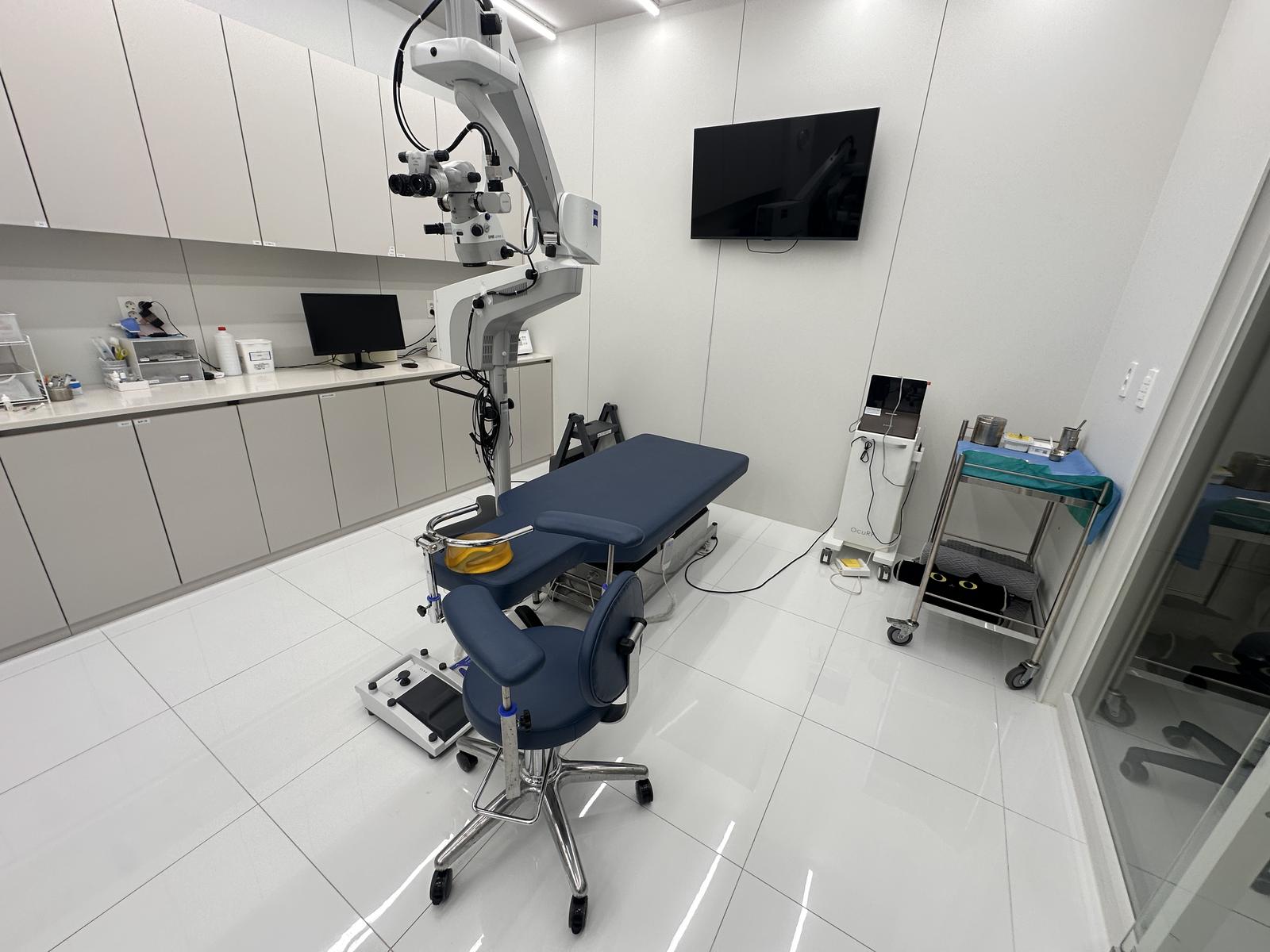
You've read every Korea EVO ICL procedure steps and procedure guide you could find. Are you still unsure whether a lens inside your eye makes sense in your 40s?
Take ten minutes with this before you book anything in Seoul.
By the end you'll know how the operation runs, who shouldn't have it, what reviews get right and wrong, what decides the cost and how recovery fits into a trip. That should help you choose between a lens, a laser or a different plan for your eyes and your budget.
Hello, I'm Dr. Lee Ki-il, Medical Director and ophthalmologist at OLIM Eye Clinic in Gangnam. I'm an adjunct professor at Seoul St. Mary's Hospital and a member of ASCRS and KSCRS, the American and Korean societies for cataract and refractive surgery.
Our comprehensive eye exam runs about 60 tests, including checks for glaucoma, retinal conditions and dry eye. I review your results and explain them to you in person, and I recommend only the surgery your eyes need. We also treat presbyopia and cataract, which matters once you're past 40.
I'm writing this because most step-by-step guides end in the operating room. Especially past 40, the decision that matters comes earlier: should your eye get a lens at all?
An ICL is a thin lens inserted through a small incision and placed behind the iris, in front of your own lens, and the cornea isn't reshaped. It suits adults with high myopia, a stable prescription and enough room inside the eye. It does nothing for the reading blur that starts in your 40s.
For a first conversation about your own eyes, send a photo of your latest glasses or contact lens prescription on WhatsApp with your age. Add the one question on your mind, such as whether a lens still makes sense at your age.
Your numbers decide itSend a photo of your prescription or eye exam report. The doctor reviews it.
How does the ICL procedure go, step by step?
Most Korea EVO ICL procedure steps and procedure descriptions online follow the same sequence. Most of the work happens before surgery day.
Before surgery: measuring the space inside your eye
An ICL sits in a narrow gap between the iris and your natural lens, so the measurements decide whether it can go in at all. Surgeons usually look at these:
- Anterior chamber depth, the space in front of the iris. A shallow chamber is one of the most frequent reasons the lens isn't offered.
- Endothelial cell count, the layer of cells that keeps the cornea clear. These cells don't regenerate, so a low count for your age is a warning sign.
- The internal width of the eye, which sets the lens size.
- Your prescription over time, to confirm it has stopped changing.
- The retina, because very nearsighted eyes tend to have thinner retinas that tear more easily.
OLIM's 23 devices include an OCULUS Pentacam, an IOL Master 700 and an OPTOS widefield retinal camera.
On surgery day
Numbing drops go in and the pupil is dilated. The folded lens is injected through a small incision at the edge of the cornea, unfolds, and is tucked behind the iris. The operation itself is usually short. The dilation, waiting and checks around it take much longer. Eye pressure is usually checked afterward, because a short rise in pressure is one of the first things surgeons watch for.
Older ICL designs needed a tiny opening in the iris so fluid could circulate.
EVO or ECHO?
EVO is STAAR Surgical's ICL. At OLIM the lens is ECHO ICL, which corrects very high myopia, astigmatism and even hyperopia. If the brand matters to you, ask which lens model would go in your eye and why.
When would I advise against an ICL?
I don't operate on eyes that don't need surgery. With an ICL, the reasons to stop can usually be measured. In general medicine, these are the eyes that should wait or skip it:
- a shallow anterior chamber or a low endothelial cell count
- a prescription that's still changing, or pregnancy and breastfeeding, when the prescription can shift
- active inflammation or infection in the eye, or glaucoma or diabetic eye disease that isn't under control
- a natural lens that is already clouding, in which case cataract surgery may be the better conversation
- moderate myopia with corneas thick enough for laser. My article on choosing between SMILE, LASIK and LASEK in Korea covers that decision.
The age question
Presbyopia is the stiffening of the eye's own lens. As the American Academy of Ophthalmology explains, it usually becomes noticeable after about 40. An ICL corrects distance vision but does nothing for near focus. At 44 or 48, you'd probably need reading glasses soon after surgery, if you don't already.
Your natural lens behind the ICL matters too. Cataract usually develops later in life, and cataract surgery removes the natural lens. An ICL in front of it would generally come out in the same operation. Past the mid-40s, the useful question is how many years a lens like this would serve before that point.
That's why I lean toward having presbyopia surgery earlier, before cataract develops alongside it in your 60s. At OLIM, presbyopia surgery is possible in your 40s and 50s even without cataract. For some people in their mid-40s with high myopia, the question shifts from which ICL to whether a lens-based presbyopia option fits better. That comes down to how clear your natural lens still is and how much near work you do.
An example
Say you're 46 and around minus 10 with 1.75 of astigmatism. Doctors at home told you your corneas are too thin for laser. You've started holding your phone at arm's length, and you have a week off. On paper an ICL fits: high myopia and thin corneas.
Before deciding, I'd want to see your chamber depth, your cell count and how clear your natural lens is. If those look good and reading glasses don't bother you, an ICL makes sense. If your natural lens is starting to cloud, or near vision bothers you more than distance, I'd talk about presbyopia or cataract options instead.
Risks and side effects to know
In the first days, glare and halos around lights at night, a scratchy feeling, mild redness and blur from the dilating drops are common. Most of these settle within days to weeks. Night halos can take longer, and some people keep them.
The less common problems deserve the most weight. The FDA's page on phakic lens risks lists cataract, gradual loss of endothelial cells, raised eye pressure and glaucoma, retinal detachment, infection, and the chance that the lens needs repositioning, exchange or removal. A lens that sits too close to or too far from your natural lens is one reason a second operation may be needed. Surgeons call that gap the vault.
After you fly home, see an ophthalmologist the same day if you have any of these: sudden eye pain, a red eye with worsening vision, a headache with nausea and halos, or new flashes, a shower of floaters or a shadow across your vision. Don't wait for the next scheduled check. The CDC's medical tourism guidance suggests arranging follow-up care at home before you travel and carrying copies of your records. For an ICL, that means the lens model, power and size.
Eyes respond differently, and only an in-person exam can show whether the lens suits yours.
If you've already had an eye exam at home, send a photo of the report on WhatsApp. Include any eye conditions you've been treated for, and ask which of the measurements above you'd still need.
Your numbers decide itSend a photo of your prescription or eye exam report. The doctor reviews it.
What do ICL reviews get right and wrong?
Three claims come up again and again in review threads. Here's how they hold up medically.
"You can't feel the lens." For most people this is true. The lens sits behind the iris, where you don't feel it the way you feel a contact lens on the cornea.
"Halos at night are normal." This is partly true. Many people notice them at first. They often fade over months, but not for everyone, and night driving is worth asking about if you do a lot of it.
"It's fully reversible." This is half true. The lens can be removed, but removal is another operation with its own risks. Changes like a cataract that started forming don't reverse when the lens comes out.
What decides the cost of an ICL for your eyes?
In short, these are the factors that move the cost:
- The lens type. A toric lens for astigmatism differs from a spherical one, and a lens may need to be ordered for your exact power and size.
- One eye or both.
- The tests before surgery, including any you've already had at home.
- Follow-up, both in Seoul and with an ophthalmologist once you're home.
The cost inquiry form is on OLIM's English homepage. For a figure for your own eyes, ask on WhatsApp and type out your prescription numbers.
Recovery and the trip home
Many people can see well enough to get around within a day. Vision can stay hazy for a few days and keep settling over the following weeks. Checks in the first days after surgery are common, so how many nights you spend in Seoul matters more than how long the operation takes. Ask how many days to plan before you book flights.
OLIM is open Monday, Tuesday and Thursday from 10:00 to 19:00, Friday from 10:00 to 19:30 and Saturday from 09:00 to 15:00. It's closed on Wednesdays and Sundays. Registration for exams and surgery closes two hours before closing time. If you land on a Tuesday evening, the next open day is Thursday. The clinic is about 200m from Exit 6 of Eonju Station.
Surgeons usually ask you not to rub the eye, to keep tap water and eye makeup away for the first period, and to use the drops as prescribed. Ask how long each rule applies to you.
What to send before you plan anything
Start on WhatsApp with your travel dates and the one question you most want answered, for instance whether a lens or presbyopia surgery fits better at 46. You can ask before booking anything. When you come to Gangnam, I'll go through your test results with you and recommend the option that fits your eyes, even if that means not operating.
Frequently asked questions
Can an ICL be taken out later?
Yes, the lens can usually be removed or exchanged. That is a second operation with its own risks. It's most often done when cataract surgery is needed, because the natural lens behind the ICL is replaced then.
Are both eyes done on the same day?
Some surgeons treat both eyes on the same day and others do them on separate days. Ask about this before booking, because it changes how many days you need in Seoul.
Will I still need reading glasses after an ICL?
If you're in your 40s or older, probably yes. An ICL corrects distance vision and doesn't change the stiffening of your natural lens that causes presbyopia.
How long does an ICL stay in the eye?
It's designed to stay long term. Many people keep it until cataract surgery, when it's usually removed along with the natural lens.
Is the lens EVO or ECHO at OLIM?
The ICL listed at OLIM is ECHO ICL. If you're comparing it with EVO, ask which model and size would be planned for your eye.
Sources
- Phakic Intraocular Lenses: What are the risks? · U.S. Food and Drug Administration
- What Is Presbyopia? · American Academy of Ophthalmology
- FDA approves STAAR Surgical's EVO Visian ICL for myopia (2022) · Optometry Times
- Medical Tourism · U.S. Centers for Disease Control and Prevention
- Phakic Intraocular Lens Implantation for the Correction of Myopia (Ophthalmic Technology Assessment, 2009) · American Academy of Ophthalmology
Written with AI assistance from OLIM Eye Clinic Gangnam's published information and the medical sources listed below. This article is general medical information and does not replace a diagnosis. Whether and how to operate is decided after an in-person exam.