
 한국어
 English
 繁體中文
 Монгол хэл
Korea EVO ICL Recovery Time Isn't One Number: How Long Should You Plan? Cost, Reviews and Methods
Many people see well within a day or a few days of ICL surgery, but the eye keeps healing for weeks. Your flight date should follow your first checks, because raised eye pressure can't be judged by how sharp things look.
Afraid the Korea EVO ICL recovery time you keep reading about, often just one day, won't hold up once you're on a plane home with a new lens in each eye?
Read this before you choose a return flight.
You'll know how long each stage of healing usually takes, what reviews get right, which methods change the timeline and what decides the cost, so you can plan days that fit your eyes and your budget.
Hello, I'm Dr. Lee Ki-il, Medical Director and ophthalmologist at OLIM Eye Clinic in Gangnam.
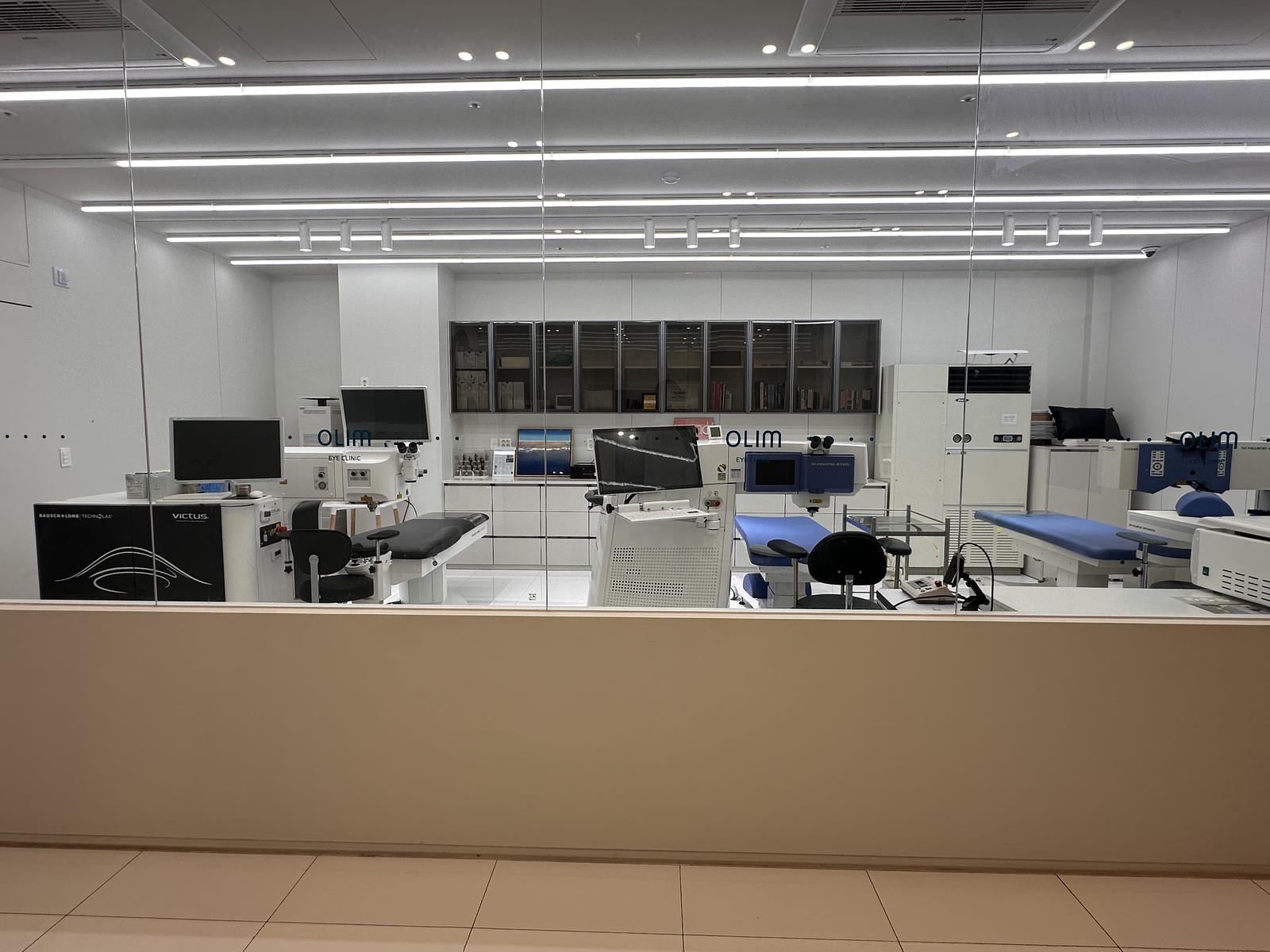
Exams, surgery, recovery and care all continue on floors 2–5 of one building at 546 Nonhyeon-ro. The clinic has 23 diagnostic, surgical and treatment devices, and I review your test results and explain them to you in person.
I wrote this because a single recovery figure gets copied from page to page, and people book flights around it.
Many people see well enough for ordinary tasks within a day or a few days, while the eye keeps healing for several weeks. Your flight date should depend on your first checks, whatever the clock says.
If the flight home is what worries you, send your glasses prescription and travel dates on WhatsApp, and ask how many days to leave between surgery and departure.
Your numbers decide itSend a photo of your prescription or eye exam report. The doctor reviews it.
What does "one day" actually measure?
In short, it measures how soon you can see, and very little else. An implantable lens corrects vision the moment it's in place, so sharp sight can arrive well ahead of healing.
The belief usually runs like this: no laser and no corneal tissue removed, so there's almost nothing to recover from. The first half is correct. The lens sits behind the iris and the cornea isn't reshaped.
One more source of confusion is on my own homepage. The same-day line, exam in the morning and home in the afternoon, describes 5th-generation SMILE. The figures of 1–2 days for LASIK and 2–4 days for LASEK belong to those procedures too. None of them should be read across to a lens implant.
How long is Korea EVO ICL recovery time at each stage?
Put simply, these are general patterns for this kind of surgery. Your surgeon's instructions come first.
| When | What's typical | What it means |
|---|---|---|
| First hours | Blur, watering, light sensitivity, a scratchy feeling | You won't be able to drive, so plan a companion or public transport |
| Next day | Many people can read signs clearly | A good moment for a pressure and lens-position check |
| First week | Vision steadies; eye drops on a schedule | Avoid rubbing and getting water in the eye |
| Months and years | Eyes feel ordinary | Keep having eye exams at home |
The number that surprises people is the last row. Recovery from the operation ends, but the lens stays in a living eye, and that eye still deserves regular checks.
Why pressure outranks sharpness on day one
If I could pick only one number from a day-one chart, it would be eye pressure. The FDA lists increased pressure inside the eye after surgery among the risks of phakic lenses, and notes that prolonged high pressure can cause vision loss.
You can have a sharp eye chart and high pressure on the same morning. Some people feel an ache, and others feel little. So a clear view from the hotel window tells you about the lens power, and almost nothing about pressure.
The second measurement is vault, the gap between the implant and your natural lens. Too little or too much space can matter over time, which is why surgeons look at it after surgery as well as before.
Can you fly home after the first check?
Often, yes, once your surgeon has seen stable findings. The bigger questions are what happens if something changes, and whether your schedule leaves room for a second look.
Say you're at about minus 9.50 with astigmatism and have nine days of leave. Three things shape that trip. You'd stop contact lenses 1–2 weeks before surgery, and that starts at home. And the clinic is closed on Wednesdays and Sundays, so surgery on a Tuesday or a Saturday would put the next calendar day on a closed date. Ask how checks would be arranged before you fix that date.
In your position I'd leave several days between the second eye and departure, with one spare day you could give up. That's my reasoning for a trip of this length, and your measurements may change it.
Before you decide on dates, you can see OLIM Eye Clinic's hours, location and contact details. Then send a photo of your most recent exam report on WhatsApp, and ask which day your first check would fall on.
Your numbers decide itSend a photo of your prescription or eye exam report. The doctor reviews it.
Methods: how the lens and the two-eye plan change your timeline
EVO Visian ICL is a lens model from STAAR Surgical, approved by the FDA for myopia in 2022. Its central port was designed so that a separate opening in the iris usually isn't needed. Older designs generally needed that step, which could add a stage to your schedule.
The lens named on my clinic's page is ECHO ICL, used for very high myopia, astigmatism and hyperopia. If a particular model matters to you, ask which lens is planned and why.
Three choices move the calendar most:
- Toric or non-toric. A toric lens corrects astigmatism, and it may occasionally rotate and need repositioning.
- Both eyes close together or further apart. A gap means more days in Seoul but lets the first eye inform the second. Ask how yours would be planned.
- Lens or laser. If your cornea is thick enough, laser may be on the table, with its own trade-offs such as dry eye. I compared those in how your cornea shapes the choice between SMILE, LASIK and LASEK.
What do reviews get right about ICL recovery?
The claim you'll read most is "I could see the next morning." That is often true, and it answers only the vision question.
"Halos at night" is also a true complaint. The FDA names glare, halos and trouble in low light among the risks, and for many people they fade or become less noticeable over time, though not for everyone.
"It's reversible, so there's nothing to worry about" needs correcting. A lens can usually be removed, but removal is another operation inside the eye, and it doesn't undo every effect the first surgery may have had.
What decides the cost of EVO ICL in Korea?
Five things move it for most people: the lens type (with or without astigmatism correction), one eye or both, the exam tests your eyes need, the follow-up visits, and how many days you stay in Seoul. Medication and any care at home after your return belong in your own budget as well.
For a figure that fits your case, ask on WhatsApp what it would cost, and include a photo of your prescription.
Risks and side effects to know
Common early effects are blur, light sensitivity, irritation and halos, which usually ease over days to weeks. Less common but serious problems on the FDA's list include raised pressure, cataract, loss of corneal endothelial cells, retinal detachment, infection, severe inflammation, and a need for further surgery to reposition, replace or remove the lens. The FDA also notes that long-term data are limited.
People who usually need to wait or rethink include those with a prescription that's still changing, a shallow space at the front of the eye, a low endothelial cell count, active eye inflammation or infection, or a pregnancy. Healing differs from person to person.
Pain that builds, a red eye, sudden blur, new floaters or flashes, or a curtain across your vision need same-day care wherever you are. Before leaving Korea, get copies of your medical records, as the CDC advises, including the lens details, and find an ophthalmologist near home who can see you. The CDC also warns that follow-up care may not be covered by your insurance, so check that beforehand.
The first message is short
One photo of your prescription is enough to start, and you can ask before booking anything. Send it on WhatsApp with your possible dates and one question: how many days should I leave before flying? When you come to Seoul, I'll examine your eyes and recommend the option that fits what we find, including your flight plan.
Frequently asked questions
When can I go back to a desk job after ICL?
Many people return to screen work within a few days, once vision feels steady and the surgeon is satisfied with the first check. Expect drops to be part of your workday for a while, and ask your surgeon before you commit to a return date.
How long before I can exercise or swim?
Light walking usually comes back quickly. Swimming, hot tubs, contact sports and heavy lifting tend to wait longer, often a few weeks, because of infection and injury risk. Your surgeon's timing comes first.
Will I feel the lens in my eye?
Most people don't feel an implantable lens once the early scratchiness passes. The lens sits behind the iris, away from the surface nerves that cause that gritty feeling. Ongoing discomfort deserves a check.
How soon should contact lenses stop before surgery?
Stop contact lenses 1–2 weeks before surgery, because the cornea needs time to return to its natural state. You can confirm the exact length for your lenses on WhatsApp.
Do I need an eye doctor at home afterward?
Yes, I'd arrange one before you travel. Regular exams let a local ophthalmologist follow your pressure, cornea and lens over the years, and bringing your surgical records makes those visits more useful.
Sources
- Phakic Intraocular Lenses: What are the risks? · U.S. Food and Drug Administration
- FDA approves STAAR Surgical's EVO Visian ICL for myopia (2022) · Optometry Times
- Medical Tourism · U.S. Centers for Disease Control and Prevention
Written with AI assistance from OLIM Eye Clinic Gangnam's published information and the medical sources listed below. This article is general medical information and does not replace a diagnosis. Whether and how to operate is decided after an in-person exam.