
 한국어
 English
 繁體中文
 Монгол хэл
Korea Cataract Reviews Korea Travelers Can Trust: Which Questions Test Them? Cost, Methods and Recovery
Reviews can tell you what a visit felt like, but rarely whether the lens choice and follow-up plan suit your parent. Six questions at the consultation will show you more, and the answers can be checked against the eye's own measurements.
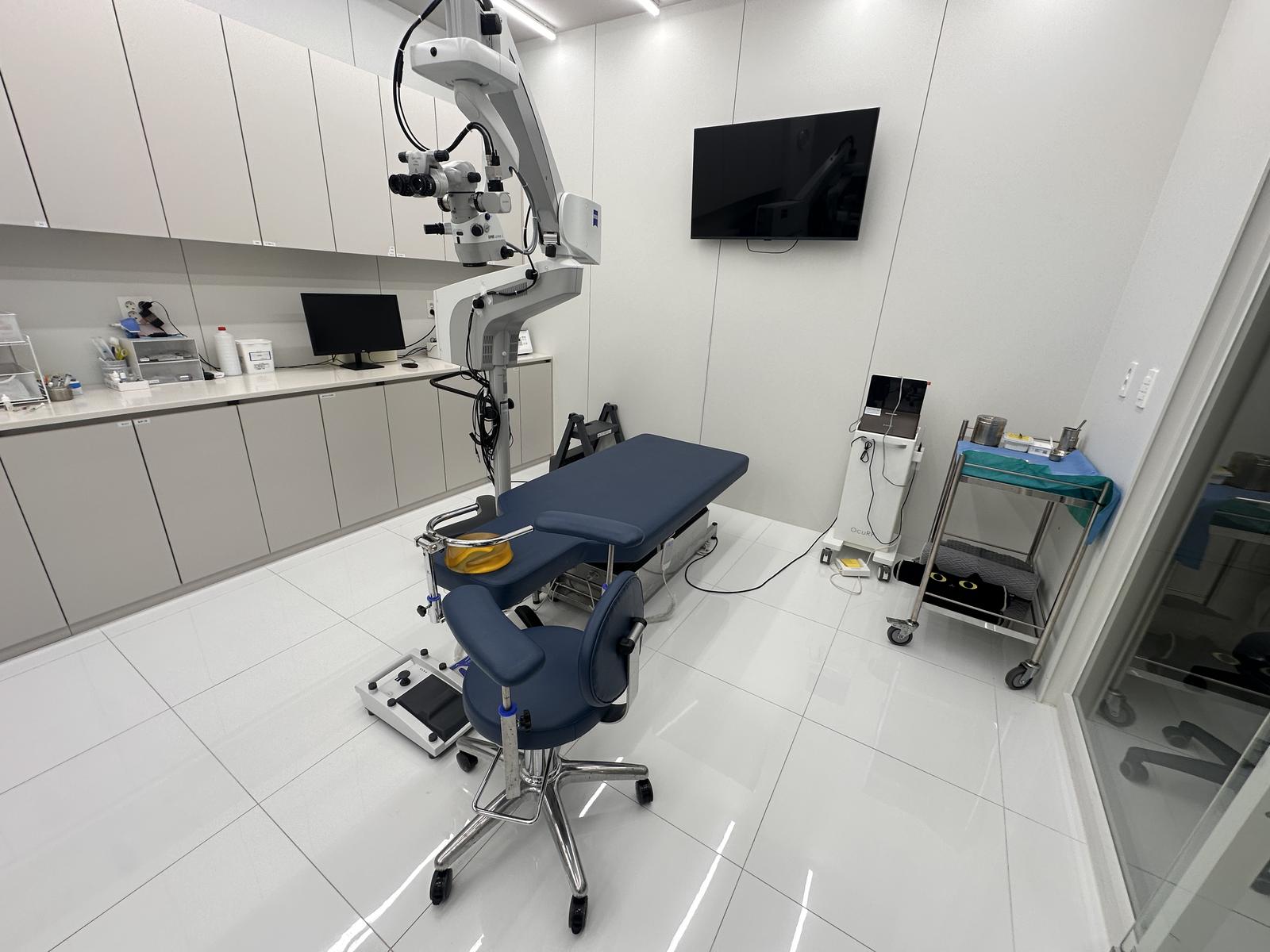
Reading Korea cataract reviews Korea travelers have posted, and still unsure who to trust with your mother's or father's eyes?
Before you shortlist anyone, go through these questions.
They'll show you what reviews leave out, how the surgical methods differ, what a realistic recovery means for a trip from abroad and what decides the cost, so you can weigh a clinic against your parent's eyes and your family's budget.
Hello, I'm Dr. Lee Ki-il, Medical Director and ophthalmologist at OLIM Eye Clinic in Gangnam, Seoul.
We examine with about 60 tests in a comprehensive exam and operate on cataracts with the VICTUS femtosecond laser and ALCON CENTURION. My research has focused on cataract and posterior corneal astigmatism, and I explain your parent's results in person.
I wrote this because families often compare star ratings when the decisions that matter most for an older eye never appear in a review.
Reviews can tell you how a visit felt. To judge the care itself, ask how the blur was explained, which lens was chosen and why, and who will follow the eye once your parent is home.
If you're still gathering opinions, send a photo of your parent's latest eye report on WhatsApp and ask which of the questions below matters most for those results.
Your numbers decide itSend a photo of your prescription or eye exam report. The doctor reviews it.
What do forums leave out?
Most posts describe the waiting room, the staff and how the next morning looked. Those details are real, and they say little about the measurements behind a lens choice.
Three claims come up again and again. "The surgery only took a few minutes" is usually accurate and tells you nothing about planning. "I didn't need glasses afterward" depends on the lens and the eye, so it can't transfer to your father. "My cataract came back" is a misunderstanding: the National Eye Institute explains that posterior capsule opacification, or secondary cataract, can develop weeks, months or years later and can be treated with a laser.
The Korea cataract reviews Korea travelers leave are a reasonable place to collect questions. The consultation is where you get them answered.
Which six questions should you ask, and how do you read the answers?
Bring these to any clinic. A useful answer refers to your parent's own measurements.
1. Is the cataract causing all of this blur?
Not all dimming comes from the lens. Dry eye, presbyopia, retinal disease and glaucoma can sit alongside a cataract, and surgery won't fix those.
A good answer names what else was examined. At my clinic the equipment includes OPTOS DAYTONA for wide-field retinal images and TOPCON 3D OCT-1 for cross-sections of the retina and optic nerve. If a parent has diabetes or macular changes, ask what vision can be expected once the cataract is gone.
2. Which lens, and what will still need glasses?
The American Academy of Ophthalmology describes several kinds of intraocular lens, including monofocal, multifocal, extended-depth-of-focus and toric types. Listen for trade-offs. A lens with more range may bring more glare or halos at night, and a monofocal lens usually leaves reading glasses in the picture.
A reply that names one lens for everybody tells you less than a reply that begins with what your mother does all day.
3. How were lens power and astigmatism measured?
Cataract surgery sets the eye's focus for years, so this measurement counts. The IOL Master 700 at my clinic calculates lens power without touching the eye.
Astigmatism deserves its own question. The back surface of the cornea contributes too, which is the subject of my own research, and a calculation that ignores it can leave a small error. Ask how both surfaces were taken into account.
4. Laser or ultrasound, and why for this eye?
This is the methods question, and most reviews blur it. Nearly all modern cataract surgery uses ultrasound to break up the cloudy lens. A femtosecond laser can make some of the cuts before that step. At my clinic that pairing is the VICTUS femtosecond laser with ALCON CENTURION, through a small incision and without stitches.
A good answer explains why it does or doesn't help this particular eye, such as a dense cataract or a fragile cornea.
5. How far apart would the two eyes be?
This one reshapes the whole trip. The National Eye Institute says each eye is usually done at a separate time, about a month apart. Surgeons may plan shorter gaps in some cases, so ask what would be proposed and what would make that safer or less so.
6. Who sees the eye after your parent flies home?
Get a named plan. Ask when the first check falls and what happens if it lands on a closed day; my clinic is closed on Wednesdays and Sundays. Ask for records that a home ophthalmologist can read. The CDC advises travelers to get copies of all medical records before returning home, and translated if necessary.
What does one parent's two eyes over three weeks look like?
Say your mother is 72, has diabetes, cataracts in both eyes, reads every evening, and you can take three weeks off. On those facts, I'd want the retina looked at before talking about lenses, because diabetic changes affect both the result and the lens choice.
Then comes the calendar. A one-month gap doesn't fit in three weeks, so you'd be choosing between one eye this trip, a return visit, or asking whether a shorter gap is reasonable for her. A multifocal lens would also need a harder look, since retinal disease can reduce what that design offers.
When you write to the clinic, list her medications and conditions, plus what she most wants to see clearly. You can read about OLIM Eye Clinic's location, hours and services before you do. Then send that list on WhatsApp and ask whether both eyes could fit in your dates.
Your numbers decide itSend a photo of your prescription or eye exam report. The doctor reviews it.
What do the first weeks of recovery look like?
According to the National Eye Institute, the eye should feel better after 1 or 2 days, and most people are completely healed by 8 weeks. Your parent's doctor will schedule checkups to make sure healing is on track.
For an older traveler, a long flight also has its own concerns, and the CDC notes that flying after a procedure raises the risk of blood clots. Raise this with the surgeon and with your parent's own physician, especially with any heart or clotting history.
What decides the cost for your parent?
The main factors are the lens type, one eye or both, whether a femtosecond laser is used, the exams required by other conditions such as diabetes, and the number of visits and days in Seoul. Budget also for a return trip if the eyes are staged, and for follow-up at home.
To get a figure for your parent's case, ask on WhatsApp what it would cost and include the eye report and the lens type you're considering.
What risks and side effects should you know?
Common temporary effects include blurry vision, redness, grittiness and light sensitivity in the first days. Less common problems include raised eye pressure, swelling of the retina or cornea, a shifted lens, and focus that misses the target. Infection and retinal detachment are rare but serious.
Surgery may need to wait if there's active eye inflammation or infection, poorly controlled diabetes or blood pressure, or a retinal problem that needs treating first. Tell the surgeon about all medications, including blood thinners and any prostate drugs, since some affect the surgery. Outcomes vary with the health of the whole eye.
If your parent has growing pain, sudden vision loss, new floaters or flashes, or a shadow across the vision after flying home, they need same-day care from a local ophthalmologist.
For readers weighing vision correction rather than cataract treatment, how the cornea steers SMILE, LASIK and LASEK covers a different decision.
Start with one photo
One photo of the latest report is enough to begin, and you can ask before booking anything. Send it on WhatsApp with one question from the list above, whichever your family keeps coming back to. When your parent comes to Seoul, I'll examine both eyes and recommend the treatment that fits what we find.
Frequently asked questions
Can we come only to find out whether surgery is needed?
Yes. OLIM Eye Clinic examines the eyes first and recommends only the surgery that's needed, so a visit can end with no operation at all if the eyes don't call for one.
Which days does Dr. Lee see patients?
Dr. Lee Ki-il sees patients on Monday, Tuesday, Thursday, Friday and Saturday. The clinic is closed on Wednesdays and Sundays, and registration for exams and surgery closes 2 hours before closing.
Is blurry vision at 60 always a cataract?
No. Presbyopia and cataract have different causes, and dry eye, retinal disease or glaucoma can also dim vision. An exam is what separates them, which is why the answer to the first question above matters.
Could a cataract lens be replaced later if we regret the choice?
Exchange is sometimes possible, but it's another operation and gets harder with time. That's why the lens conversation deserves time before surgery, with your parent's daily habits on the table.
Sources
- Cataract Surgery · National Eye Institute (NIH)
- IOL Implants: Lens Replacement After Cataracts · American Academy of Ophthalmology
- Medical Tourism · U.S. Centers for Disease Control and Prevention
Written with AI assistance from OLIM Eye Clinic Gangnam's published information and the medical sources listed below. This article is general medical information and does not replace a diagnosis. Whether and how to operate is decided after an in-person exam.