
 한국어
 English
 繁體中文
 Монгол хэл
Korea EVO ICL How to Choose a Clinical Center: The Lens Name Won't Decide It, So What Will? Cost, Reviews and Methods
Choose the center by how it sizes the lens to your eye, who explains those numbers to you, and who checks the lens after you fly home. The lens name settles very little of that.
Does "Korea EVO ICL how to choose a clinical center" come down to who carries the lens name, and what happens if you pick wrong?
Read this before you compare another clinic page.
You'll know what decides the cost, what reviews get right and wrong, which methods to weigh, and which measurements to ask about, so you can judge a center by your own eye and your budget.
Hello, I'm Dr. Lee Ki-il, Medical Director and ophthalmologist at OLIM Eye Clinic in Gangnam.
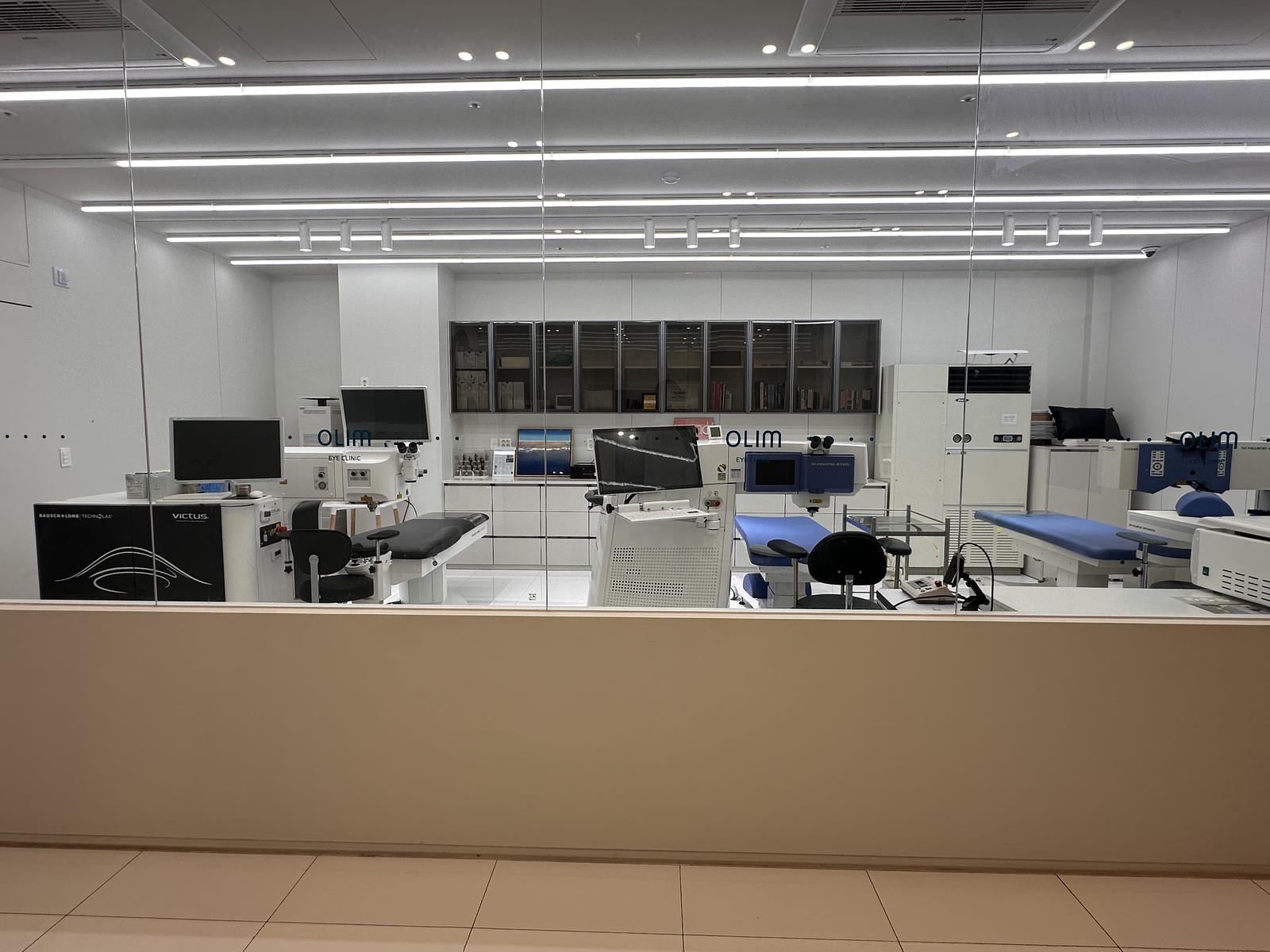
Our Eye Exam Center runs about 60 tests before any surgery, with devices that include a Pentacam, an OPTOS and an IOL Master 700. I review your results and explain them to you in person.
I wrote this because people often shortlist centers by lens brand, which is the point where the comparison starts to go wrong.
Choose the center by how it sizes the lens to your eye, who explains the numbers, and who checks the lens after you fly home. The lens name comes after those three.
For a first step, send a photo of your latest prescription on WhatsApp and ask which lens model and which sizing measurements apply to an eye like yours. You'll then have a concrete answer to hold against other centers.
Your numbers decide itSend a photo of your prescription or eye exam report. The doctor reviews it.
Does the lens name decide which center to choose?
In short, it tells you less than it seems to. EVO is the name of STAAR Surgical's lens line, and the US FDA approved the EVO Visian ICL for myopia in 2022. That's useful background on one product. It says nothing about how a given center measures your eye.
One plain point, since you searched for EVO by name. Our site lists the ICL we use as ECHO ICL, for very high myopia, astigmatism and even hyperopia. If the exact model matters to you, ask about it directly, here or anywhere else, and ask what the difference means for your eye.
The question worth asking about any model is design. Beyond that, the same lens can sit well in one eye and poorly in another, and that comes from fit.
Korea EVO ICL how to choose a clinical center: the numbers to ask for
An ICL sits behind the iris and in front of your own lens, in a very small space. Unlike a laser plan, the prescription alone can't tell you whether it will fit. With ICL, the number I'd look at before the prescription is the depth of that space.
The gap left between the implant and your own lens is called the vault. Too little, and the implant may sit close enough to raise the chance of cataract. Too much, and it can crowd the eye's drainage angle and raise pressure. Lens sizing is how a surgeon aims between those two, so it's where I'd press any center hardest.
| Ask about | Why it matters | A good question |
|---|---|---|
| Anterior chamber depth | Shows if the lens has room | What's your minimum for this lens? |
| Eye width measurements | Used to choose lens size | Which measurement sets the size? |
| Corneal cell count | These cells don't grow back | What count would rule me out? |
| Retina check | High myopia raises retinal risk | Is it examined before surgery? |
| Vault after surgery | Confirms how the lens sits | When is it checked, and can I have the figure? |
A center that answers these in plain terms is showing you how it thinks. You can't judge the surgeon's hands from abroad, but you can judge this.
Why doesn't a long device list settle it?
A device list tells you what can be measured. It doesn't tell you who reads the result or what happens when the result is unwelcome. We have 23 devices, 12 of them for testing, and I'd still tell you to ask the second question: who sits down with you and explains the numbers?
Here, that's me. Whether to have surgery is discussed only after we see your results, and we choose together from there.
Say you're about minus 11, and a surgeon at home ruled out laser because your corneas are thin. Your first instinct may be to search for a center that says yes. I'd reason differently. If your chamber depth and corneal cell count are adequate and your retina looks sound, ICL is a real conversation. If the chamber is shallow, I wouldn't implant, whatever the lens name. If the retina shows a weak area, that gets dealt with before any talk of vision correction.
What can go wrong, and who handles it once you're home?
Put simply, this is the question I'd put ahead of the lens name, because the operation takes place in Seoul and the following months happen wherever you live.
Risks and side effects to know
In the early period, many people notice glare, halos, some blur or a dry, scratchy feeling. These usually ease over days to weeks, though halos at night can last longer for some people. Pressure inside the eye can also rise soon after surgery, which is one reason early checks matter.
Less common but more serious problems are listed in the FDA's summary of phakic lens risks, including vision loss, cataract, raised pressure, damage to the cornea's inner cells, and the need for further surgery. Results differ from person to person.
You'd generally be told to wait or skip it if your prescription is still changing, your chamber is shallow, your corneal cell count is low, you have active inflammation or poorly controlled glaucoma, or you're pregnant or breastfeeding.
After you fly home, treat pain, new redness, sudden blur, or halos with nausea as same-day reasons to see an ophthalmologist. The CDC's advice for medical travelers includes arranging follow-up at home before you leave and carrying your records, so ask any center for your lens model, power and vault measurements. We keep monitoring eyes with regular checkups after surgery; ask how many of those fit your stay and what your eye doctor at home should take over.
To work this out before booking flights, send your likely return date on WhatsApp and ask which checks need to fall before it and which records you should carry home.
Your numbers decide itSend a photo of your prescription or eye exam report. The doctor reviews it.
Which methods should you compare besides ICL?
ICL leaves the cornea uncut, which is why it comes up when corneas are thin or the prescription is high. The trade-off is that it's surgery inside the eye. Our menu also includes 5th-generation SMILE, LASIK and LASEK, which you'll find on OLIM Eye Clinic's English site. Those reshape the cornea by removing tissue, so they usually aren't offered to thin or irregular corneas, and dry eye is a common early complaint.
It would be a poor outcome to choose a center for ICL when your eye never needed a lens at all.
What decides the cost of EVO ICL in Korea?
A quote is only comparable when you know what it covers. These are the things that move it:
- Lens type: the model, and whether you need a toric lens for astigmatism.
- One eye or both: and whether the price covers each eye or the pair.
- Exam scope: which tests are included before surgery.
- Follow-up: how many checks and which drops the quote includes.
- Your days in Korea: flights and lodging grow with the number of visits you need.
Ask on WhatsApp what it would cost for your case, and whether astigmatism changes the figure.
What do reviews get right and wrong?
Three claims come up again and again in ICL threads.
"I could see clearly the next day." This is common and medically plausible, because the lens corrects immediately. It tells you little about sizing or about how the eye will do in a year.
"Halos mean the surgery went wrong." Usually not. Halos are a known effect, and they often fade. Halos that worsen or come with pain or nausea do need an exam.
"Ask for your vault number." This one's right. It's a real measurement, you're entitled to ask about it, and your eye doctor at home will want it. A thread can't tell you what a healthy figure is for your eye, though, because that reading belongs with your own exam.
What to send first
One photo of your latest prescription on WhatsApp is enough, and you can ask before booking anything. Add the one question this article left open for you, whether that's the lens model, the sizing or the cost.
When you come, your eyes are examined at the Eye Exam Center, I go through the results with you in person, and we choose the treatment that fits them.
Frequently asked questions
Do you offer EVO ICL by that name?
Our site lists our implantable lens as ECHO ICL. If you're looking for a specific model, ask on WhatsApp which lens would be discussed for your eye and what the name means in practice.
Can an ICL be taken out later?
An ICL can generally be removed or exchanged, which is an advantage over removing corneal tissue. Removal is still eye surgery with its own risks, and it may not undo every effect, so it shouldn't be your reason to choose a center quickly.
Can exam and ICL surgery happen on the same day?
The one-day exam and surgery described on our site refers to SMILE. Don't assume it carries over to ICL. Ask about the ICL timing before you fix your flights.
How long should I stop wearing contacts first?
Please stop contact lenses 1–2 weeks before vision correction surgery, because the cornea needs time to return to its natural state. Confirm the exact length on WhatsApp.
Which days can I come for an exam in Seoul?
We're open Monday, Tuesday and Thursday 10:00–19:00, Friday 10:00–19:30 and Saturday 09:00–15:00, with lunch 13:00–14:00, and closed Wednesday and Sunday. Registration for exams and surgery closes 2 hours before closing. We're about 200m from Exit 6 of Eonju Station.
Sources
- Phakic Intraocular Lenses: What are the risks? · U.S. Food and Drug Administration
- FDA approves STAAR Surgical's EVO Visian ICL for myopia (2022) · Optometry Times
- Medical Tourism · U.S. Centers for Disease Control and Prevention
Written with AI assistance from OLIM Eye Clinic Gangnam's published information and the medical sources listed below. This article is general medical information and does not replace a diagnosis. Whether and how to operate is decided after an in-person exam.